
Chapter One
1. Parc-Extension, February
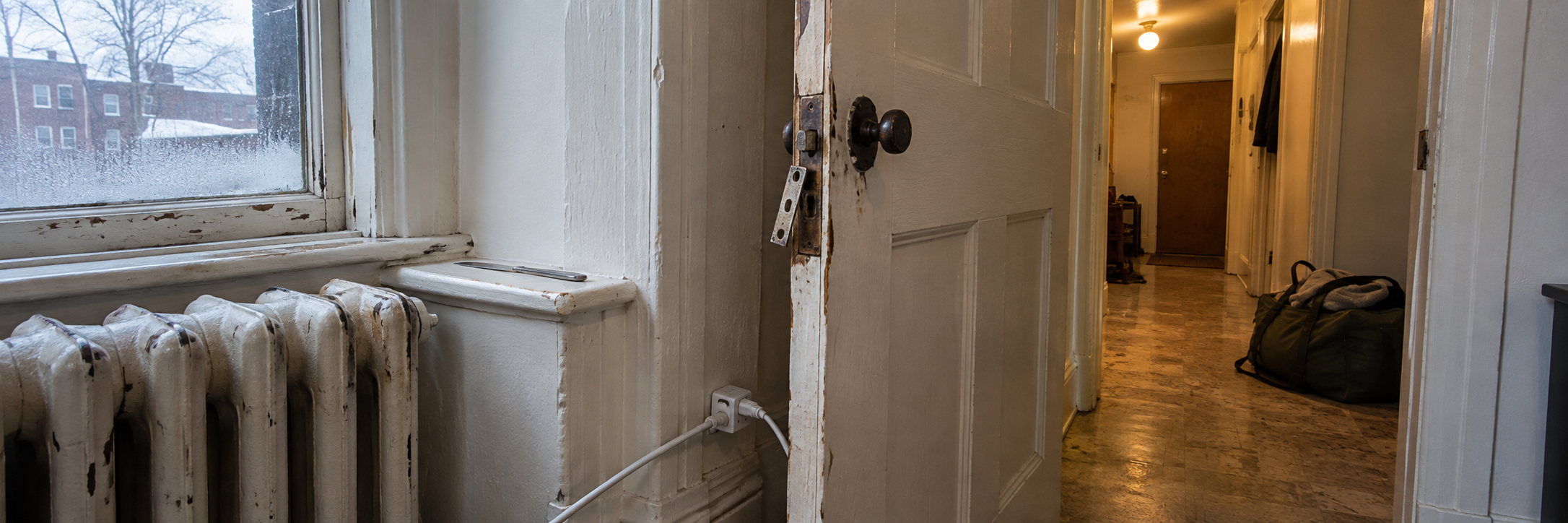
The listing said chauffé éclairé and the stairwell on Ball had one bulb, on the first landing, so I came up the last flight with my phone light in my teeth and a bag in each hand and there was Sabrina at my door with a butter knife, working the latch. She didn't turn around. It sticks, she said, you lift and lean, and she lifted and leaned and it opened and she gave me the knife. Keep it by the door. No, it's the good knife, give it back. I kept it three weeks. She never asked.
She worked nights at the Jean Coutu and slept days in a mask with DO NOT DISTURB printed across the eyes, and around noon she'd push it up on her forehead and come out to tell us to shut the fuck up, with the mask up there saying it too. I liked her voice before she cleared it. Low, full of gravel. Then she'd cough and it was just a voice.
My room was six forty. You could stand next to the bed if the bag was on the bed. So the bag lived on the bed and I took it off to sleep and put it back to stand up, every morning, until March.
Milad had the back room and two apps and a third job at a fryer somewhere on Saint-Laurent, which is where the burn came from, a shiny patch on the inside of his forearm smoother than the rest of him. He ate over the sink with the insulated bag still on his back and both phones face up on the counter. When one lit he looked at it and kept chewing. When the other lit he said câlice to it, quietly, not angry. Once a drop of dishwater sat on the burn and didn't run, the skin was that smooth, and I was watching it and he said what. Nothing. He shook his arm over the plates and went back out.
He told me Parc-Ex was finished. Everybody knew, the university, the rents, his cousin's building on Querbes. I said I'd only just got here. That's what finished means, he said, and went down the stairs two at a time with the bag bouncing on his back.
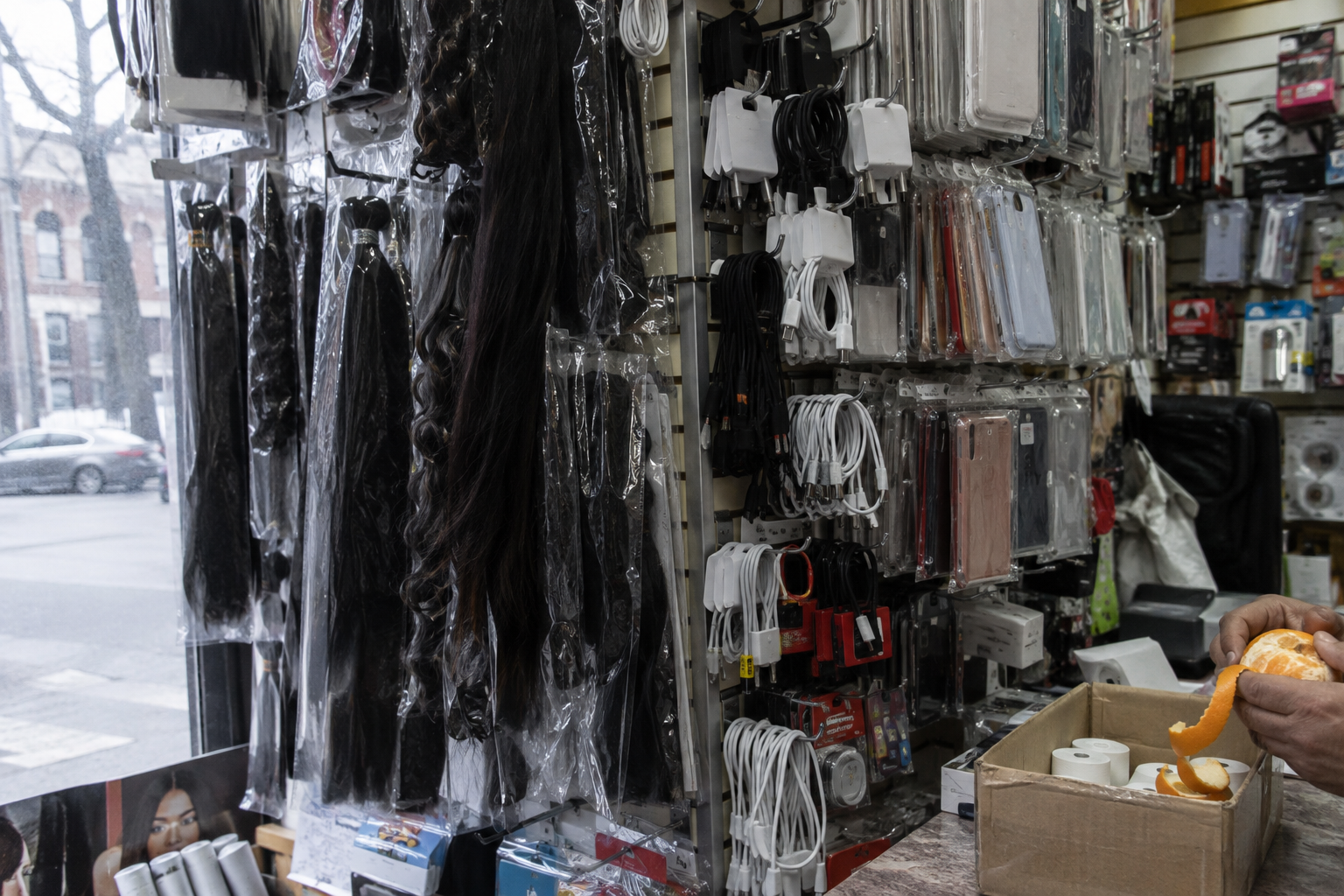
On the corner there was a shop with hair extensions in the window, long black ropes of it hanging between the phone cases, and a woman inside eating an orange at the counter. I went in for nothing. She peeled it in one piece. I stood there looking at chargers I didn't need, smelling that orange, then walked four blocks in the slush to the fruiterie on Jean-Talon because I had to have one, not later, now. I ate it on our stairs in my coat. I put the peel in my pocket because I didn't want to go in yet and it was still in the pocket in April, gone hard and brown, and I kept it.
The heat went off the second week. The radiators ticked all night, cold. I called. The landlord sent his son, Kosta, no gloves, a tape measure on his belt, rubbing his hands and asking how we could live like this, as if we'd done it. I said I had called about that. He said the boiler was a whole conversation, with his father, with the city, with a guy in Laval, and started measuring the hallway. For what he never said. Selling, probably, or the renovation that was coming for everybody.
I'd been in all afternoon. Sabrina asleep through the wall. A truck outside backing up, stopping, backing up, nobody guiding it. When he knelt to hook the tape under my baseboard his shirt rode up and his back was goosebumped and there was a line of hair going down, and I asked did he have to be somewhere. He did not have to be somewhere. We fucked on the mattress with my bag on the floor for once.
Afterward he showed me a video of his dog, an enormous brown thing, refusing to walk across a kitchen floor somebody had just mopped. It whined high and thin, a sound for a much smaller dog. We watched it four times. I laughed harder each time and couldn't have told you why, and then he was pulling his jeans on and looking for the tape measure, which was under me.
2. Côte-des-Neiges, May
The job was choosing. Two answers to the same question, both written by a machine, and I clicked the better one, all day, at a desk above a dollar store. How do I get blood out of a mattress. One said cold water and salt. One said it understood that stains can be frustrating. Cold water. Then more stains, a dead hamster, a man asking how to make an email sound less angry when he had every right, I read what they'd done to him, he had every right, and I picked the answer that let him stay a little angry. We were the quality team. It said so on the lanyard.
The man next to me had been a dentist in Algiers. He ate fennel out of a yogurt tub all morning, crunching, and did the work without his mouth moving at all. Mine moved. I read the answers the way you read in grade two, lips going, and by lunch the hinge of my jaw ached, and on the 165 home I caught myself mouthing the ads. Whitening. A college. A woman with her arms flung out over PRÊT PERSONNEL.
I lived in a basement with Fadwa, who worked at a care home and came off shift late and cooked. Every night. I'd hear the knife first, through the wall by my head, fast on the board, then the oil, and I'd lie there telling myself I was going to sleep until the onions caught and that was it, I was up. She cooked in her bra with her work trousers undone at the top. The window was at sidewalk height. Boots went past level with the stove. Nobody ever looked down, except once a dog.
She left a plate under foil. Some mornings I ate it cold standing at the sink, the rice gone hard at the edges, which is the best part. Some nights I sat on the floor against the fridge while she finished and we watched a man somewhere restore a handbag, beige, designer, somebody's kid had gone at it with a pen. Fadwa hated the colour. She said so every few minutes. We watched all of it.
Her boyfriend honked from the street instead of coming to the door. The first Friday I went to the window, which put my face at the level of his hubcap, and gave the hubcap the finger. He honked again. Fadwa laughed, then stopped laughing and said get away from there, seriously, and I went out the back and up the lane with my jacket half on.
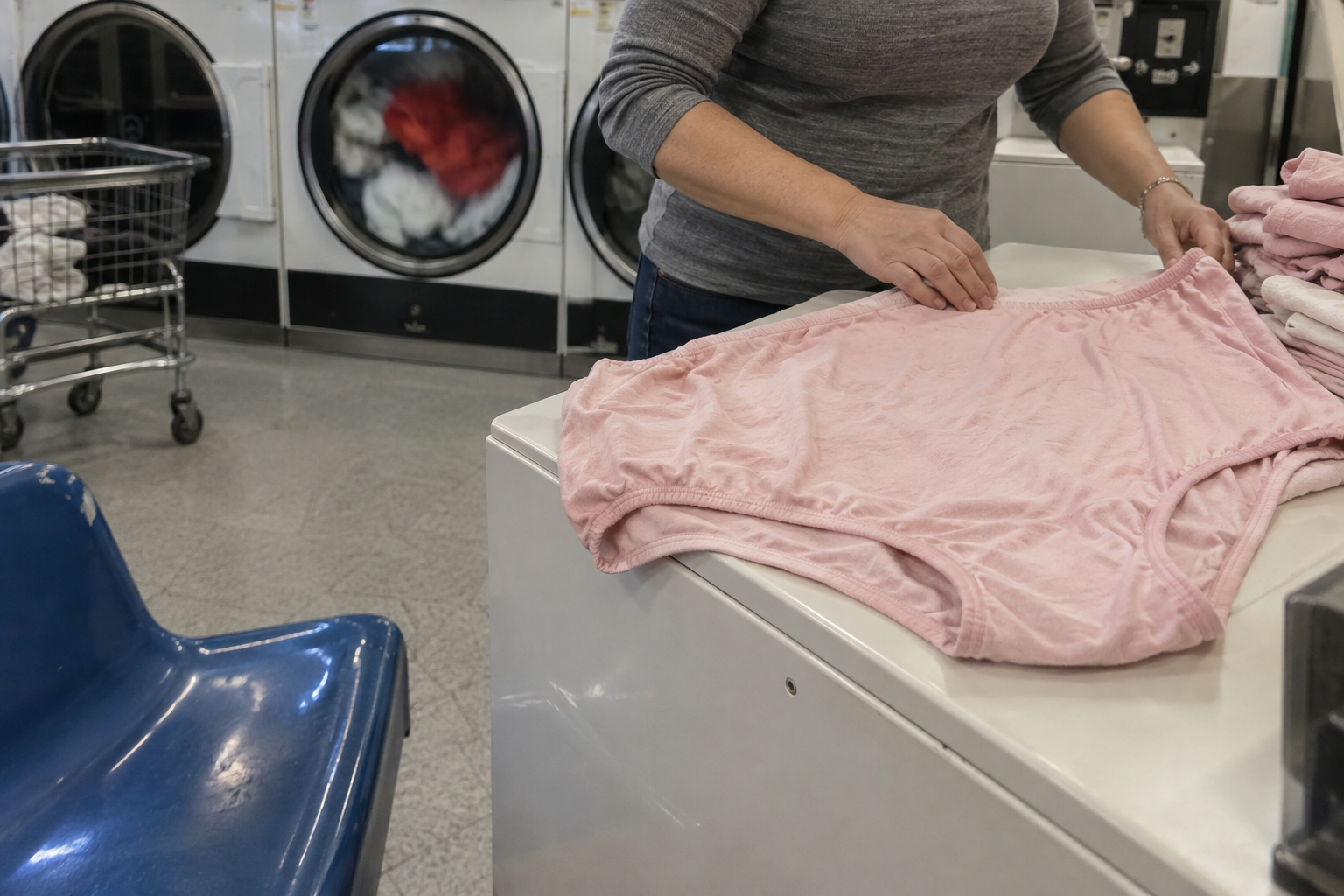
I walked until things closed. The laundromat on Van Horne stays open late. A woman was folding a pile of enormous pink underpants on top of a dryer, smoothing each pair flat with both palms, and I sat on the bench with no laundry and watched a machine that wasn't mine go round. Somebody's towels, one red one flopping over the white. She asked had it eaten my money. No. She went back to folding. I stayed until her dryer stopped and then it seemed like I had to go.
In May Fadwa needed a letter saying she'd lived in the basement since 2025, for the tribunal or the bank, I didn't ask which. She moved in in 2027. I said yes before she'd finished explaining. I typed it on the work laptop on my break with her behind me reading over my shoulder, her hand on my shoulder, then her thumb on the side of my neck, just resting there while she said it's é, not è. I couldn't find the key. I've known where that key is my whole life. Her hand went to the back of the chair and I found it.
She read it twice and said my French was getting better. It wasn't. I printed two. In case, I said. In case of what, she said, and took both.
3. Verdun, July
The cooling centre was a church hall with half the lights off to keep the heat down. Across from me a woman had a baby and a bag of frozen peas and kept moving the peas from the baby's neck to her own face and back, saying sorry, sorry, every time the baby made a sound. The baby didn't mind. It kicked when the peas went away. An old man was doing a crossword standing up, the paper on the seat of a chair he would not sit in, and every so often he said a word out loud that wasn't the answer. I went out to smoke and came back soaked down the back of my shirt, and the woman held out the peas without looking at me and I put them on my wrists.
I met Sam at the dep on Wellington. He was explaining orange wine to the cashier, who had already rung it through and was waiting for the card. Have you tried it, he said, to me. No. He had air conditioning, he mentioned that too, central. I went home with him for the air and for his forearms, which were freckled and very clean, the forearms of a man who had never carried anything to a car he didn't want to carry.
His place had a Peloton aimed at the window, a couch nobody sat on, and one fork. He ate with chopsticks so I could have the fork. A noodle fell in my lap and he reached for it before either of us thought, and his fingers were cold from the bottle. That was the first night. There were four more.
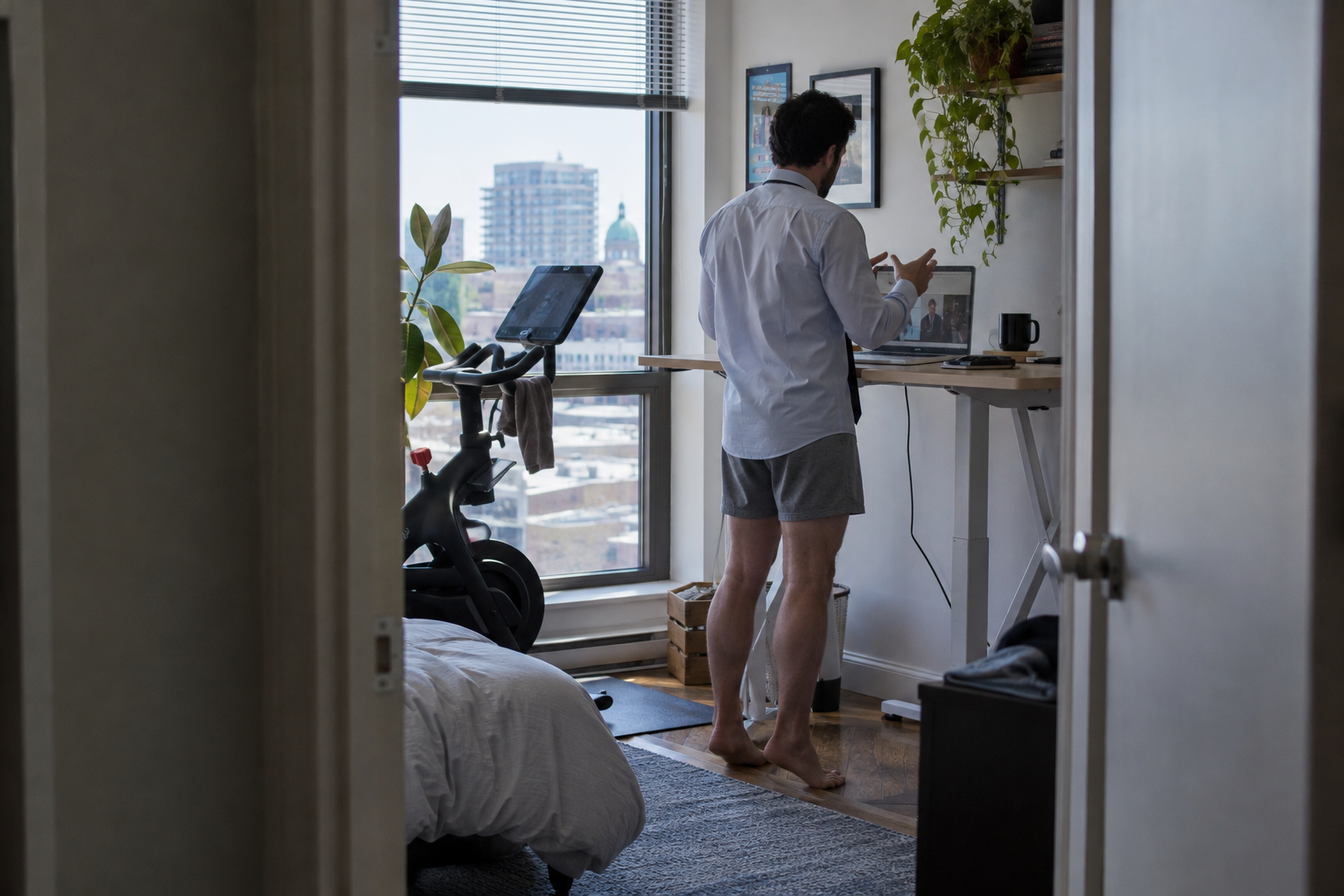
He worked in climate tech from a desk that went up and down on a button. In the mornings I lay in his bed with the door open and listened to him agree with people. Totally. A hundred percent. When somebody disagreed the desk went up, I could hear the motor, and from the bed I could see him in a shirt and tie on top and boxers below, going up on his toes when he made a point. I emailed my own job to say the internet was out. Then I lay there with the sheet pulled up to my nose for the pleasure of being cold in July. I would have paid him for it.
In the evenings he talked about carbon markets, offsets, credits. I watched the water run down his glass and catch on his thumb. He wanted me to ask something, he kept leaving gaps. I asked was there anything to eat. There was cold rice. We fried it with the last egg and ate it out of the pan standing up and he was better then, with his hands busy, he stopped explaining.
His girlfriend was back Sunday. He told me while I was going through his cupboards for a clean towel, cupboards I knew by then, I knew exactly where the towels were and I was opening them anyway. I slammed one and it bounced back and hit me in the face. Neither of us said anything. Then I was laughing so hard I had to sit on the edge of the tub, my cheekbone hurting, and I couldn't stop.
I only came for the air conditioning, I said.
I know, he said. But it was nice. Right?
It was nice. I took the wet towel off the hook and hung it over the shower rail so it would be dry before she got home, and then I thought, what am I doing, and left it there.
4. Hochelaga-Maisonneuve, September
At a party on Adam somebody gave me a shift unloading chairs for a wedding and I wrote the address on the flap of a beer box and tore it off. Then a woman asked had I ever worked a bar, and I had, and did I own black pants, and I said depends how dark the bar is. She laughed and gave me a number. By eleven I had two jobs in my back pocket on cardboard and hadn't paid for a drink.
Somebody's cousin had a guitar and knew the first verse of everything. Out on the balcony three women were fighting about a union vote, really fighting, and every few minutes they'd stop to cup a lighter for each other and then go straight back in where they'd left off. I stood out there with them until my beer went warm. Nobody asked who I was.
Vincent fixed motorcycles on Ontario. Grey beard, black in the creases of his knuckles and down the sides of his nails that didn't come out, I watched him try later, at his sink, with a brush. When I said quality team he asked where, his ex had done quality at Bombardier, so I explained the two answers and picking the better one, and he asked what you do when they're both bad. You pick one anyway, I said. He looked at me a while as if I'd said something about myself.
He lived over a shop and the solvent came up through the floor so the whole bed smelled faintly of it. He moved a pile of folded laundry off the bed onto a chair, carefully, so it wouldn't come unfolded. He was careful with me the same way and I wanted to take his wrist and say stop, stop being careful, and I didn't, I kept my hands under my head. A bike went past outside, a loud one, and we both stopped and listened to it all the way up the street.
After, he sat on the edge of the bed with his back to me, turning a sleeve right side out, and told me his son was at Sainte-Justine. Since June. He's eight. They had said aggressive and I waited for the rest of the sentence and there wasn't any rest, that was the word, that was what they'd given him to take home.
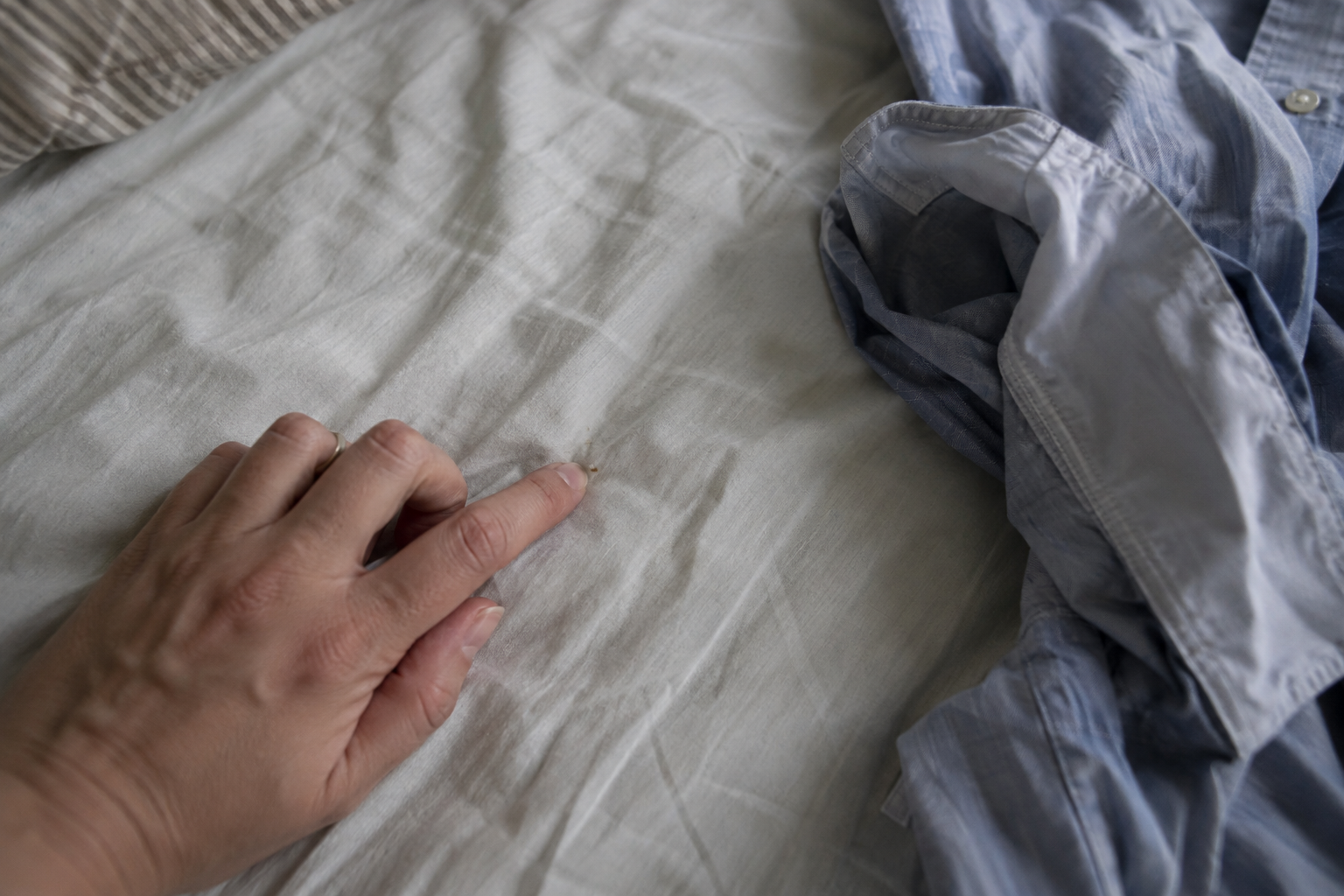
His shoulders went. No sound at all. I put my hand out and got as far as the sheet behind him, and there was a hard little bead of detergent stuck in the weave, and I picked at it, I picked at it a long time. He kept working at the sleeve.
What does he like?
Motorcycles, what do you think.
He laughed through his nose and wiped it with the shirt he still hadn't put on. Which ones, I said. He showed me on his phone, a whole folder, and corrected how I said Ducati, twice. Downstairs somebody rattled the shop shutter and shouted his name. He called down that he was coming and didn't move, and I learned the difference between a Monster and a Panigale, which I have never needed since.
5. Saint-Henri, November
I was painting the kitchen when the letter came, so there was a white thumbprint on the envelope before I'd opened it. Major works. Temporary vacancy. A paragraph about cooperation and the owner's commitment to his tenants. Two thousand if I was out by the first. I looked up the tribunal, and the date they were giving for hearings was so far off I read the year twice, then once more out loud.
I finished the kitchen anyway. I'd pulled the stove out and scraped somebody's years of grease off the wall behind it, orange and soft, it came up in curls, and I wanted that strip white, the strip nobody was ever going to see. It took the whole afternoon.
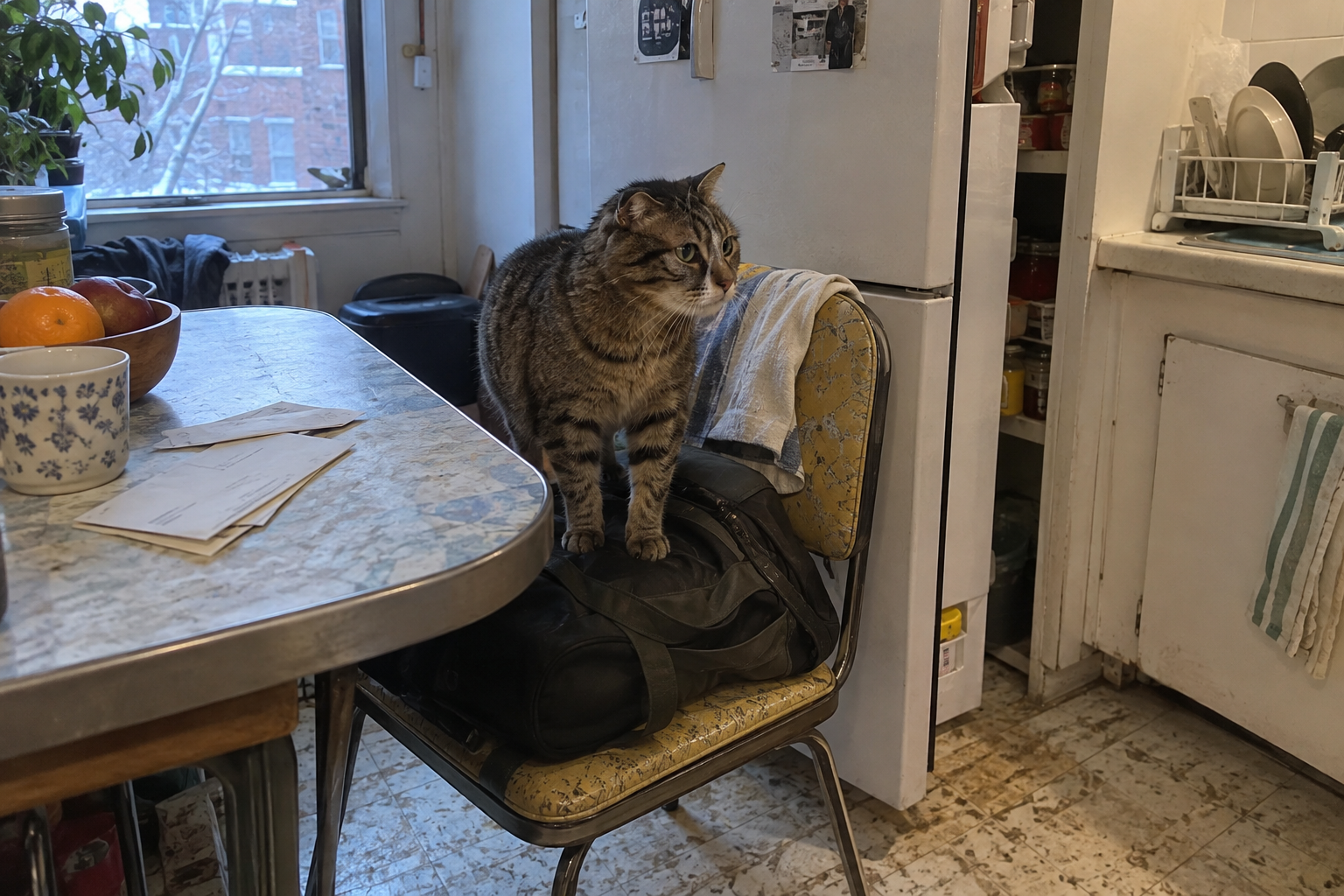
The Portuguese couple downstairs stopped answering their door. Everyone else took the money. I kept getting the last tenant's mail, a Hydro bill, a flyer from a church, and that's how I found her, on Bourget, in a place so small the table blocked half the fridge. Her cat had one ear. It stood on my bag, just stood there, until I moved the bag to a chair, and then it stood on the chair.
She asked what I was paying. Eleven ninety. She'd paid six ten. She said six ten again to the cat, as if the cat had been there when she signed and could back her up.
Her husband had died in the back room. By the window.
I'm sorry.
Don't be sorry, it was the good room.
She wanted to know about the lilac. Still there. Did the upstairs toilet still do that, the whine after you flush. Yes, half the night sometimes. She laughed with her whole back, leaning into the chair, and for a while we were both living there, in the same apartment, complaining about the same toilet, her table digging into my knee and someone next door flattening cans one at a time for the deposit.
What's your name?
Renée.
Renée, listen to me. Don't take the two thousand.
I said I'd think about it. On the sidewalk I had a missed call about a coat check that night, and I called back with my glove in my teeth and it was already gone. I bought a cheese pastry that was too hot and burned the roof of my mouth, and the whole ride home I kept going at the loose skin with my tongue. I couldn't leave it alone.
I took the money. I pushed the stove back before the paint had dried and it stuck to the wall, and when the movers pulled it out I heard it tear.
6. Griffintown, January
Marie-Ève could strip a king bed on the phone to her daughter and never stop talking and end up with the fitted sheet folded square over one arm. I got mine caught under the mattress corner every time. She'd come out of the bathroom still talking, no you're not going, no, and lift the corner for me with her knee without looking. By the time I could do it myself she'd stopped watching.
We did short-term rentals, the glass ones along the canal. The app gave you a window between checkout and check-in. Sometimes a guest was still there when I let myself in. One man sat on the couch in his underwear eating pad thai out of the box and looked at me as if I'd come to take the smell of his pad thai away from him, which I had. I went down and waited by the recycling. You don't get paid for the recycling.
On Peel a woman was filming herself unpacking. She lifted a dress out of tissue paper and gasped, then put it back in the tissue and lifted it out and gasped again. I needed the floor she was standing on. One sec, she said, one sec. Afterward I caught myself in the elevator mirror holding the vacuum hose out in front of me and I did her gasp. I did it twice.
I found a wedding ring on a sink and put it in the nightstand, which is what we did with rings. In another unit, in the nightstand, there was a gun lying on a phone charger. I shut the drawer with my hip and did the bathroom and the kitchen and then the bathroom again because I'd forgotten the mirror. I didn't tell Marie-Ève. What she told me that week was never open the fridge, and later, never open the fridge unless you're finished for the day, and then she opened one and took a yogurt.
There was a unit on Ottawa Street that was usually empty on Tuesdays. I started with the shower. Hot water hard on the back of my neck until I had to bend over with it, and I stayed bent over until the mirror went white, then dried off with a towel I'd have to wash, which was fine, I was washing them anyway. I lay down on the bed while the load ran. That was all I meant to do.
When I woke up the windows were black. Across the courtyard a man in his underwear was watering a plant, lifting every leaf with two fingers to get the water underneath. It took him a long time. I watched every leaf. I didn't have to be anywhere until morning.
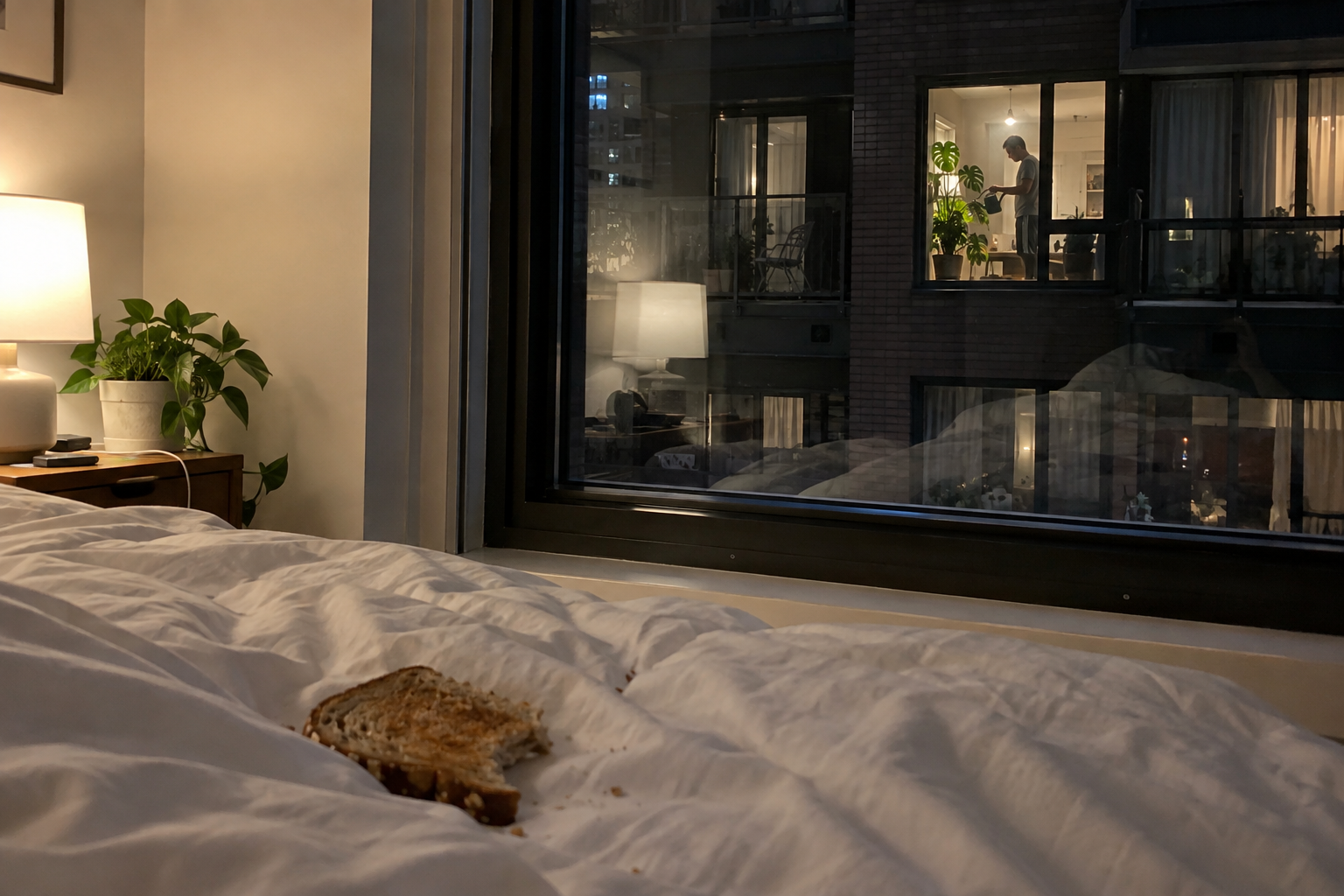
After that I checked the calendar before I packed my bag. I brought nothing, not a toothbrush. You wipe the sink, you take the hair off the pillow, you go back for the hair you only think you took. If they found out that was the job gone, and maybe Marie-Ève's with it, she'd vouched for me. I kept going on Tuesdays. Chauffé, éclairé. I ate toast in the bed with the lamp on and my bare feet out from under the duvet, and in the morning there were crumbs stuck to my soles and I put another load in and went back to bed until it finished.
7. Mile End, March
My mother still had the apartment on Waverly, the one with the good windows. She was standing at them when I came up, holding a mug of tea she'd forgotten, watching the schoolyard across the street where nothing was happening. Her knees were bad on the stairs now. Across the hall Mrs. Kalogeras still listened for the mail truck and had her door open before the driver was out, same as always.
I'd brought rolls from a catering shift, a whole bag, they were going to throw them out. My mother cut one open, pressed the middle with her thumb, said these had been frozen, and ate it at the sink. I took the rest out of the bag so they wouldn't sweat.
Was I seeing anybody.
Sort of.
Sort of's fine, she said. Sort of is most of it.
I went for the bread knife, the drawer left of the stove where it had been my whole life, and my hand went all the way to the back past the grater and it wasn't there. I moved it, she said, and reached across me for the other drawer, and I went back into the table so hard the tea went over. We both grabbed for the mug. Neither of us got it.
Leave it. Get the cloth.
The cloth was where it had always been, over the tap.
She told me about Denis while I was on my knees wiping. 1994. She'd slept with him on the stairs, on the landing between our door and the upstairs, because I was asleep inside and the upstairs were away. He sold stereo speakers. She could not remember, she said, and she had tried, whether he gave her the discount before or after. Mrs. Kalogeras had come out for the mail partway through and gone straight back in.
I sat back on my heels with the wet cloth. My mother was laughing with a mouthful of roll, trying not to lose any.
Those speakers?
Those speakers. You want soup?
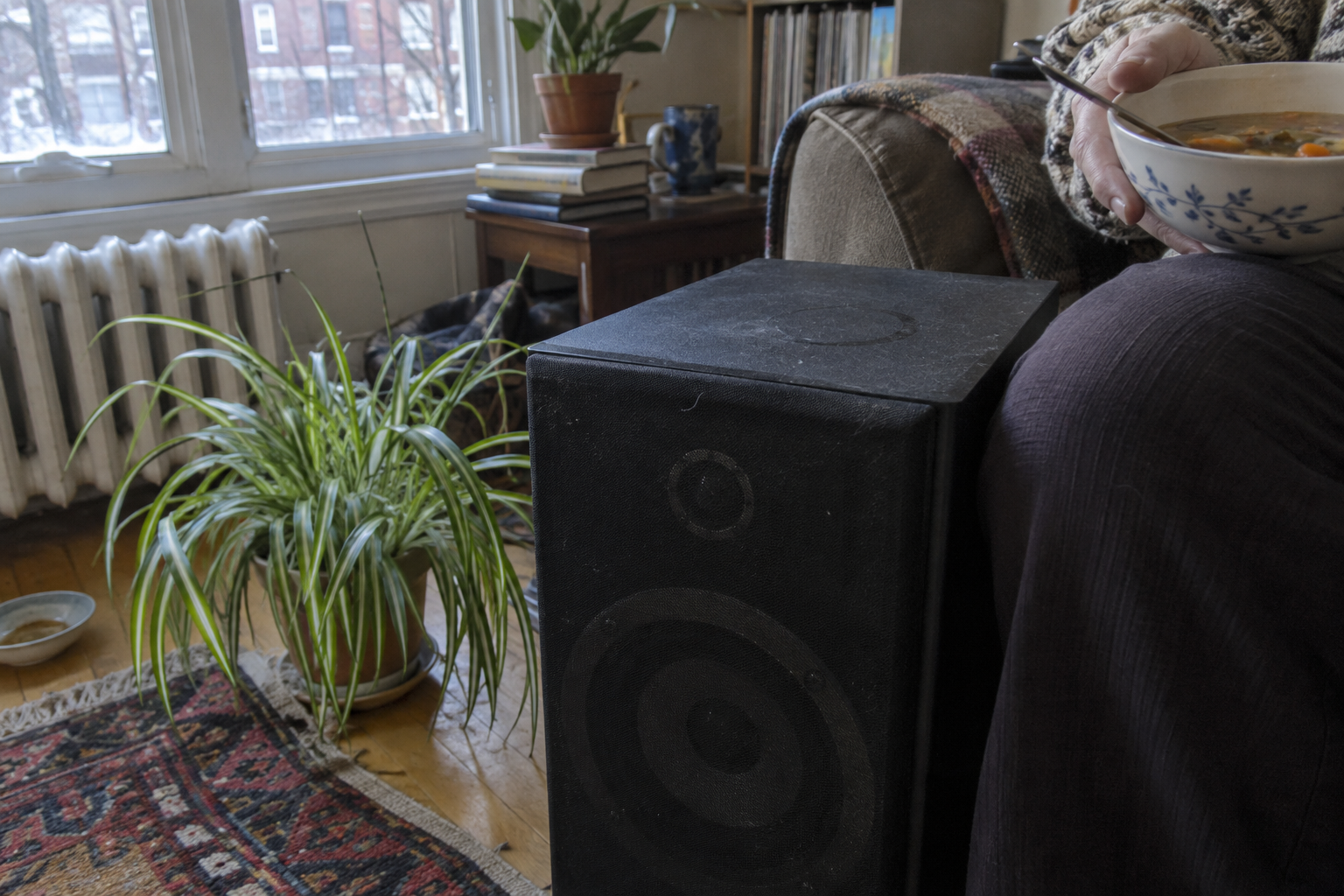
I did. While she heated it I took the spider plant off the left one and put music on, loud, too loud for the middle of the afternoon with the school right there. Turn it down, she said from the kitchen. I turned it down a bit. When she came in with the bowls I turned it down a bit more, and she sat on the arm of the couch to eat hers, next to the speaker, with her knee against it.
8. Villeray, June
Ahmed repaired elevators. I met him at the fountain in Parc Jarry, rinsing a bottle I'd found in the bottom of my bag with something green dried around the mouth, I didn't want to know what. He watched me rinse it and held out his. I'm nearly done, I said. He waited, and he waited without looking at me, which made me rush and splash my shoes.
Then the smoke came. Something was burning up north and the air went yellow and stayed yellow and got into the apartment with every window shut. I laid a wet towel along the bottom of the balcony door and lay on the floor with my face near it, breathing through wet cotton that smelled of nothing but wet cotton. The delivery app kept offering me a bonus, double, then more, if I'd go out in it. I turned the phone face down. Then I turned it over to see how much.
Ahmed came over with a fan. It pushed the same air around faster. I didn't care, I liked having him there to complain to about the fan. He took the cage off and washed the blades in my sink while I held the motor up out of the water with both hands, grey fluff coming off the blades in long strings. He had a pale band on his wrist where the watch went, the skin there softer-looking than the rest. He was explaining the new buildings, the doors, the sensors, the one part nobody can get without buying the whole assembly, and he caught me looking at his wrist.
What?
Show me the part, I said.
He found a picture on his phone and I looked at the picture of the part properly, for a long time, so he'd keep standing there.
He stayed that night and came back two nights later. In the mornings he put his head under the kitchen tap to wet his hair down and flattened it looking at himself in the side of the toaster. I wanted to go down the stairs with him and get on whatever bus he got on. I had a shift at the returns warehouse, sorting clothes people had sent back, sniffing the armpits before the tags went back on, that was really the job, sniff, tag, bin. I let him go and sat on the edge of the bed with my shoes in my hand until I was late.
Sunday the air cleared. Everybody came out onto their balconies with whatever they'd been doing inside, a woman shelling peas into a steel bowl, a man with a laptop, the kids on Casgrain screaming for no reason, and under all of it somebody downstairs beating eggs, I could hear the fork on the bowl. I went out without a jacket and walked past the bus stop and past the dep where I was supposed to get milk and kept going, down to the tracks, where the weeds were hot and smelled green again.
I sat on a concrete barrier until the backs of my legs went numb. Somewhere out of sight they were coupling cars, the big dull bang of it and then nothing and then another one. I wanted a train to come by. None did.
When I got home Ahmed had sent me a picture from inside a shaft, his boots on the roof of the car, a cable going up out of frame. I made it bigger to see where he was. Then I went on the listings. Rosemont, by the tracks. Chauffé, éclairé. The photo was a kitchen with no stove and one chair turned to face the wall. I wrote to ask when I could see it, and whether the chair came with it.
Chapter Two
prompt — chapter two
ok now. now let’s do a second chapter. let’s consider what’s been done now to be the first chapter. you’re not going to change it. this entire story process is to find out whether you are capable of writing autonomously. so this prompt now as I’m speaking it into my phone. sitting on a mountain in Bergen will go at the beginning of chapter 2 and this is the point at which our narrator goes on the road. she travels to Toronto through Winnipeg crosses. the prairies spends a bit of time and Banff National Park and then descends into Vancouver and all following that same grungy raw personal interiority confessional mode. you succeeded to a great degree at getting the the shortness and the conciseness of the sentences and I will attach two notes here but you are not to edit the first chapter at all. … what I see is this. this woman doesn’t seem to have any friends. there’s no buildup of desire. there’s no noticing of things. there’s no kind of tension that’s based on a physical proximity. there’s almost a formula of you know. how much is the rent you know? … so what I’m suggesting here is think about length of variance. you can stay parsimonious and rarely go over 10 and never bring in pretentious metaphors but consider how real authors vary the length of their sentences and shift the the level of perception personal observations. … I suspect that this character Renee does not yet have a character in your mind. What’s her back story? … but avoid psychologically creating direct linkages of you know because of this I could cause this etc etc. you know this is the world of libidinal desire. it’s a chaotic complex system, so these these interregnums volatility shifts and register all of them. may swerve inexplicably occur Collide, cause an impact, have no effect, move on, catastrophize, indifference : there’s there’s fluctuation occurring.
9. Toronto, August
Kat and I had been friends eleven years, first in Montreal and then not at all for four of them. Then again, because she picked up on the second ring like nothing had happened. She asked if I still smoked.
The Rosemont place went to somebody with a guarantor. I put what I had into two bags and gave the rest to the woman downstairs. The 6:40 takes seven hours in 2028. They have been fixing the corridor since I was in school.
Kat built sets for a company that made commercials for insurance companies; she had a wrecked shoulder from it, a girlfriend named Pris who was in Chicago more than she wasn't, a place on Sorauren she could not have got in any other year; she was rude to me inside an hour. I hadn't been talked to like that since March. I slept fourteen hours.
In Toronto nobody asks what you pay. They ask how long you've had it, which is the same question with the shame moved.
Dez came over on the Thursday to fix Kat's speakers and stayed for dinner. He did sound for other people's films and lived above a garage on Sterling; had toured with a band people my age pretend to remember, had a kid in Halifax he saw twice a year; he was easy. He put his arm along the back of the chair. I looked at his forearm the whole time Kat was telling a story about a producer. When she got to the part where the producer cries I laughed a beat late. Dez noticed that I had laughed late.
Nothing happened. He washed four plates, badly, and left at eleven. I stood in the kitchen with the water still running.
Ahmed texted from Montreal at one in the morning. Two lines about a building on Papineau and then, are you coming back. I typed and deleted. I said the elevators in Ontario are worse and he sent a laughing face. That was the last one for a while.
Kat came out for water in a t-shirt with a dead festival on it. She looked at me standing there.
She said, you're not visiting.
I said no.
She said okay. She drank the water and went back to bed. I have never in my life been so grateful to be seen and not asked about.
10. Northern Ontario, September
The train leaves Toronto at nine at night and reaches Winnipeg two days later. If it reaches Winnipeg. The freight owns the track, so passenger sits in a siding while eleven thousand feet of grain goes by in the dark. We sat four hours outside Hornepayne. Nobody explained it. Nobody in the car expected an explanation, which told me most of them had done this before.
Loreen had the seat across the aisle. She was going to a funeral in Sioux Lookout for a brother she hadn't spoken to since 2019. Twenty-two years with the school board; a thermos of rye and 7Up she was not hiding; she was funny about him. She said he was a bastard and then said it again more warmly.
Coach means you sleep sitting up with your coat as a pillow. You wake at four with your hip gone dead. The window black and your own face in it. The bathroom at the end of the car smelled like a public pool. I brushed my teeth over a steel sink with the floor moving under me and thought about nothing at all. That almost never happens.
Then the light came up over muskeg and rock and black spruce standing in water, thousands of them, and it went on being that for six hours. No town. A hydro cut every so often with the towers walking away north. Water the colour of tea.
I used to take pictures. I stood in the vestibule with the glass down and the noise enormous. I did not take a picture.
Loreen ate a sandwich at nine in the morning and offered me half without looking over. In the middle of it she said her brother had a way of standing in a doorway that made you feel the room was his. She said that when the call came her whole chest went loose, like a belt off.
I said I was sorry.
She said, don't be sorry yet, I haven't decided.
11. Winnipeg, September
Roy is Kat's cousin. He had a house on Lipton with three people in it, and a fourth who had left a bike. He worked nights loading for a courier, was kind in a bland unswerving way, made a pot of chili on the Sunday that lasted the week; he wanted nothing from me. I could feel my body scanning him for it anyway. Finding nothing. Going quiet, disappointed, then relieved.
It went to minus four on the second night. In September. Everyone in that house talked about it the way you talk about a diagnosis in the family, informed and bored.
In Winnipeg nobody finishes a conversation outside after the middle of October. They finish it in the doorway with the cold coming in. Somebody says okay, okay, and the door shuts on the rest of it.
Emerson had the room off the kitchen and worked at a bakery; up at three, home at noon, asleep by eight; we overlapped four hours a day. One bathroom. She had flour in the creases of her knuckles that did not come out. Her forearms were better than her face and she knew it. She wore short sleeves in a cold house.
We were in the kitchen on the Wednesday. She was cutting something and I was leaning on the counter beside her with my arms folded. Neither of us moved for the length of a song on the radio. The distance was maybe eight inches. I have thought about that eight inches more than about anything that happened afterward.
What happened afterward was quick and mostly good and did not repeat. On the Friday she went to her mother's in Selkirk and texted about a dog. I left on the Sunday. She hugged me at the door with the cold coming in, said travel safe, and shut it on the rest of it. I walked to the bus with my whole chest ringing like a struck pipe. Nine days. I had known her nine days.
12. Saskatchewan, late September
Warrick was driving a pickup and an empty stock trailer from Brandon to Strathmore. He took me because his wife makes him take people, he said, so he doesn't fall asleep. He was fifty-something, had been in the Forces, had a bad knee and a good radio; he talked for forty minutes, then didn't.
The land does not open. That is the wrong word and everybody uses it. It is already open. It stays open, and you go along inside it for nine hours. The only thing that changes is which elevator is on the horizon, and then which one, and then which one. By the middle of the afternoon your sense of your own size has quietly adjusted. It does not adjust back for a couple of days.
Canola gone over. Stubble. Sloughs with birds on them. A dead deer with its legs at angles you don't see in bodies that are all right.
Two combines working in a field the size of a district, dust standing up gold behind them. A grid road going straight for so long it stopped being a road and became a fact about the planet.
I asked Warrick for his phone at one point, to take a picture, and then handed it back without taking one. He did not ask why.
He dropped me at a gas station in Swift Current and shook my hand and said good luck out there. I stood with my bags at a pump under those lights that make everybody look ill. Nothing had happened. Nothing was going to.
I want to be honest that it was one of the better days.
13. Banff, October
They put me in the kitchen at a hotel with a French name and a Chinese owner. Staff accommodation was up the hill, four to a room, four hundred a month taken off the cheque before we saw it. That is where I got a cast for the first time since the Jean Coutu.
Tarn was from Newcastle, New South Wales, and had done two seasons; lifts in winter, pot-wash in the shoulder, could not be embarrassed by anything; his laugh carried to the loading bay. Precy had been there six years and ran the line without the title or the money for it. Small, fast, unimpressed; two kids in Cebu she called at five in the morning our time; she was the best of us. Kieran climbed on his days off and washed dishes on the others. He did not talk unless the subject was rock, at which point he could not be stopped.
We were funny at two in the morning in a way that does not survive being described. Friends. I had not had any in a while.
The fire started on the eleventh, on the BC side. By the thirteenth the whole valley was the colour of a nicotine ceiling and the mountains were a rumour with an edge on it. In October. Precy said it never used to be October and went back to plating.
Kieran and I had the bunks against the same wall with a curtain between that did not reach the floor. Nine nights. I knew his breathing before I knew his face properly. On the fifth night the alarm went at three for burnt toast on two. We all stood outside in the smoke in whatever we slept in, two hundred of us, coughing and laughing. He was beside me with his arms crossed and his hands pushed under them for the cold. I looked at his wrists. He caught me looking. Neither of us did anything about it for four more days.
Then he got a call about a route and a window and went to Squamish. That was that. It had been the best thing in my week for nine days running.
Tarn said, hard luck, and gave me half his cigarette.
Precy said, you'll be all right, and put me on garde manger. Which was a promotion. Neither of us mentioned it.
14. Vancouver, December
It rains here the way it rained the whole time I was there. Everyone tells you about it before you can say anything about it yourself.
I got a room in a house on Kingsway. Bernice had a parrot, and rules about the parrot. I did prep at a place on Fraser four days and cleaned an office tower two nights. In December it goes dark at four. The wet gets into the seams of your coat and stays there. You learn the smell of your own building.
Dez was in town for eight weeks doing post on a feature. He got my number from Kat. I let a day go by before answering, because I am not a child.
We had two good nights and then we had a bad one.
The bad one was nothing, which is what I want to put down. He said something about my mother that was a joke and was accurate. I laughed. Twenty minutes later I was crying in a Skytrain station at Broadway with my hood up and my hands shaking. It could have been the joke, or the accuracy, or the eight weeks, or the woman in Winnipeg with flour in her knuckles, or my father, who drove a truck, and stopped.
I want to be clear that I do not think it was my father.
Dez texted the next morning to see if I was okay and I said fine, and he said okay. That was the honest end of it. We saw each other twice more.
My mother called on the Sunday. She has the good windows and she wanted to tell me about a leak. Halfway through she stopped and said, are you eating. I said yes. She said, you're not. Then she told me about the leak for six more minutes.
The rain went sideways past the streetlight for the whole call.
Bernice knocked and said the parrot was doing the thing. I went and looked at the parrot doing the thing. It was funny.
Later, the fires again, but that is the spring.
Chapter Three
prompt — chapter three
Notes to chapter 2: I love the line that ended section 12 about grief like a belt coming off opening your chest. That was amazing! Well placed perfect. But when it repeated as a reference to the chest at the end of chapter 12, so the placement in exactly the same place the part of the body chest, the same metaphor also of opening… it’s the strange thing about literature but repetition that is rule-based and formulaic can often become swiftly stale. … I know that poverty does entail a certain concern about rent and changing guidelines like that, but the first two segments almost felt like that was the motif. Again, it felt like a travelog of places where I think the original inspiration for the other book … is the the prurient interest of sexuality. Woody Allen famously said you know stories are about sex, death and taxes. So in this story the rent and moving places and shifting fortunes is kind of like taxes. Death does occur but the sexuality, which was at the forefront of the other stories is now a very subdued threat. This is a young woman who has chosen a life of exploration with appetites, so just be accurate and honest about following the implications of that. … if there are motifs they have to be handled in a way that is respectful of character and doesn’t introduce a numbing repetition. … The phrase at the end of section 12 that begins. I want to be honest. Well, let’s assume that the narrator in this case is always honest and she could just skip that … get more clever than this: “The bad one was nothing, which is what I want to put down.” → possible: “It was as if a shoe fell into the toilet.” and then “He said something about my mother that was a joke and was accurate. I laughed.” → possible: “He made a joke about my mother; it was too accurate; we both laughed.” … “I want to be clear that I do not think it was my father.” → Even something as simple as “It was not my father.” Bauhaus designers used to apply an adage delete the extraneous. … I want you to do a chapter 3 now and you going to go back across the country in a great hurtling swirling sweaty libido acutely insightful sentences ricocheting through paragraphs not as bland as it’s become but holding some kind of honest, raw, honest. … The narrator ends up in Toronto and the final section of the chapter. she’s getting on a plane to fly to Amsterdam.
15. Squamish, April
Kieran said Squamish the way other people say a person's name, and in April I took the bus up the Sea to Sky to find out what he meant by it. Four months of deferral. I had thought about his wrists in three provinces.
He lived with five climbers in a house on Third with chalk in the carpet and a rack in the hall worth more than everything I have owned in my life. He was browner and thinner. He had a duvet with no cover on it, and I have thought about that since, because a man sleeping under a bare duvet has made a decision and is at peace with it.
I wanted him for four months. Then I had him and it was good, it was really good, and by Sunday afternoon I was on my back doing arithmetic about buses.
He was generous and unhurried and completely serious about it, the way he was about rock. He asked what I wanted and then did that, which men describe as a technique and is actually just paying attention. Twice he laughed in the middle. I liked him better for the laughing than for any of the rest of it.
I had carried the thing nine hundred kilometres. He had only been living here.
Monday he had a route. He said come Thursday, and meant it. I said maybe.
I didn't go Thursday. On the Wednesday I got on a bus going east with a coffee I couldn't drink because of the switchbacks. Somewhere past Lillooet a woman across the aisle told me her whole divorce. I listened to all of it. It was better than Thursday would have been.
16. The Okanagan, June
Cherries first, then the packing house when my hands gave out. Piece rate on the ladders, hourly inside, and inside is worse money and better for you, which everybody tells you and nobody believes until their thumbs stop closing.
I covered Manon's shift the second week and she covered mine for four days in July, and that is how you make a friend in a valley in summer.
Manon was from Trois-Rivières, had done six seasons, drove a Corolla with a mattress in it and a milk crate of paperbacks; she called everybody chose. Deke ran the line and was gentle to the pickers and vile to the drivers. A couple from Chile, Andrés and Sol, who had a real romance going on in the bunkhouse and did not care who heard it, and good for them, honestly, because the rest of us were listening.
It got to thirty-eight and stayed. In the bunkhouse at night with the fans going you lay on top of everything in your underwear and did not touch anybody because touching was worse.
Then you touched somebody anyway.
Deke, once, badly, in the walk-in, and we both laughed about it afterward and never referred to it again. Sol's cousin Tomás who came for eleven days to help with the crush and had a laugh like a door and forearms out of a painting, and eleven days is a real length of time when it is thirty-eight degrees and nobody is anybody's anything.
Manon said, chose, you're going to burn yourself out.
I said probably.
She said, no, I mean actually, put a hat on.
The smoke came in on the twentieth from something past Merritt and the valley went under cover for nine days. The light like the inside of a jar. The cherries still coming. Everybody working with the mask pushed down under the chin; you cannot pull a ladder in a mask. Precy's line came back to me in the smoke. It never used to be June either.
17. Southern Alberta, July
His name was Boyd; a good truck, a bad house, a dog he spoke to in a completely different voice; I liked him about thirty hours.
The condom came off inside me. This happens; it had not happened since I was twenty-three; it was a Saturday.
Sunday morning in a town of eleven hundred. Boyd was decent about it and drove. Understand that decent is the whole review: he got up, he drove, he did not make a speech.
Pharmacy closed. Drive forty minutes. That one closed too, a paper sign, back Monday. Drive to the next one. Sit in the truck outside the Shoppers in a town with a Canadian Tire while it turns eleven. Go in. Walk past the shampoo twice because there is a girl on till who looks about nineteen. Go to the counter anyway.
Say it out loud with a man behind you at the blood-pressure machine. Watch the pharmacist be completely normal about it, thank God, and ask for your card.
Out of province.
No coverage. Fifty-two dollars.
I had fifty-two dollars. That is the only reason this is a story about a Sunday and not a story about something else, and I know exactly how thin that is, and so does every woman I have ever worked a season with.
Read the box in the parking lot. Sooner is better, it says. Swallow it dry in the truck because the water is in the back under the tarp. Wait. Feel nothing. Feel, an hour later, extremely something.
Boyd bought me a coffee and a bag of ketchup chips and put the radio on low without being asked, which I am still, a year on, prepared to call gallantry.
By Tuesday I was in Medicine Hat and by Thursday I was gone.
18. Winnipeg, August
Emerson picked up on the fourth ring, which is three more than Kat.
The bakery had let her go in March and she was doing mornings at a place on Corydon and living with a man named Griff, and none of that was in the messages about the dog. She said come anyway. I went anyway.
Griff was fine. Griff was so fine. He made a curry, asked good questions about the Okanagan, remembered the name of the packing house; he was no help at all. He did not once look at me the way I had come eleven hundred kilometres to be looked at.
Emerson had cut her hair. Her hands were the same, flour or no flour. I watched them on the wooden spoon, on Griff's shoulder, on the back of a chair. I sat there with my face doing the pleasant thing while I understood that I had built nine days into a country.
We had one hour on the back steps after Griff went up.
She said, that week was a good week.
I said, it was nine days.
She said, was it, and I could not tell if she was being kind or if she genuinely did not know, and I have decided not to decide.
I slept on the couch. In the morning she made me eggs and put too much salt on them the way she does, and I got the two o'clock bus, and she hugged me at the door with the heat coming in this time.
19. North of Superior, September
A man in a truck for eleven hours is either the worst idea you have had or the whole point of being alive and you find out somewhere around Marathon.
Ted hauled for a company out of Thunder Bay; a granddaughter's drawing taped over the tach, two fingers on the wheel, a long unhurried account of his knees; he was not that. Nothing like that. He bought me a sandwich in Wawa and told me his wife had been dead six years and that the trick was to keep the truck moving. He dropped me at a gas station at nine with the last light going pink off the water. He said, careful with yourself. I have thought about the way he said with.
That gas station is where I met Anouk and Sanne, Dutch, twenty-four and twenty-five, driving a rented Jetta from Halifax to Vancouver in three weeks because that is a thing you can believe is possible when you are twenty-four.
Six hundred kilometres in a car with two Dutch girls, all the windows down, the north shore going by in the dark, Anouk driving with her knee while she rolled something, Sanne screaming the words to a song from before any of us were born, the lake on our right the whole night doing nothing and being enormous.
We took cover in a picnic shelter outside Nipigon when it came down at two in the morning. We got extremely wet and then we got extremely warm. It was one of the best nights of my adult life. In the morning we ate gas-station eggs; they went west and I went east; nobody pretended.
Sanne wrote her number on my arm. It came off in the rain outside Sault Ste. Marie.
I let it.
20. Toronto, October
Kat opened the door and said, you look terrible, and I have never been so pleased.
Pris had moved in properly. There was a plant with a name. I got the couch and eleven days and a series of increasingly frank conversations at the kitchen table about what I was doing, which Kat conducted like a person defusing something and Pris conducted like a person who thought I was a good time.
Dez came by once. It was fine. We are the sort of thing that is fine now.
I did shifts at a place on Ossington with a cover charge and a band that played covers. The bartender was June; not interested, clear about it early; restful. I made eleven hundred dollars in eleven days and did not spend it.
My mother said, Amsterdam, on the phone, in a tone with four things in it.
I said I have a friend there.
I do not have a friend there. I have a Dutch girl's number that came off my arm outside Sault Ste. Marie, and a job lead from Manon's cousin, and eleven hundred dollars, and a bag that has been packed since February.
Kat drove me to Pearson at five in the morning and did not get out of the car, because she does not do that, and said, call me from there, and I said I would, and I did.
Gate B34. Two hours early because I am my mother's daughter.
Boarding, an old man in the row ahead asked the attendant, in French, whether it would be cold, and she said, it is Amsterdam, sir, it is always a little cold, and he said, good.
The cabin got dark over Labrador. I put my head against the window and thought about Kieran's hands and Sanne's mouth and Boyd's radio at low volume, one after another, without ranking them, and slept over the whole ocean.
Chapter Four
prompt — chapter four
Notes to chapter 3 … “He had a duvet with no cover on it, and I have thought about that since, because…” is again the think want pattern → “He had a duvet with no cover on it; an adult sleeping under a bare duvet generally avoids decisions.” Avoid nonspecifics such as “the thing” … Count # of sentences ending in “it.” another vagueness to replace with wit. … Be careful with intros that focus only on economics (taxes). Remember the sex, death, taxes adage, apply it occasionally not as a rule … especially when it contains a ‘vague maxim’. … “I liked him about thirty hours” suggests something petulant and impulsive about our lead character. Is she really that fickle? Unsympathetic? Why? Research Tillman — she’s more clinical yet also impulsive, adventurous yet also falls in love, grieves. … “That is the only reason this is a story about a Sunday…” Absolutes and vaguenesses can be replaced with specifics or deleted. Remember the ricochet rule: these stories are about the stray contingencies and ricochets. Perceptions. They are not stories about stories. Or stories about what kind of stories they are about… delete all meta commentary or replace with details. … Continuity pass check: search for relational accuracy. Temporality continuity correctness. … Numbers are not neat and tidy in people … Delete sentences that perform no emotional work restating what’s already stated. … I want you to write chapter 4. This is all going to be first draft. We’re just going to see if we can learn the craft of writing in this style and you’re going to build up this harness style guide for this particular system — that is not rule-based, but actually just kind of performs a bunch of checks to see if there are vaguenesses, numeric repetitions, motifs, relational continuity problems. So in this segment she travels around Europe a little bit, heads up to Bergen. An affair with a PhD candidate at the Centre for Digital Narrative who comes from Slovenia — give him a name that no one at the centre has. He is studying sexual orientation of NPCs and avatars and AI influencers in order to investigate bias within virtual environments … and she falls in love with them but also has an affair with the dentist who is married, and then goes on a voyage a little bit north, sees something shocking — a woman having a seizure in a grocery store — and returns to Bergen and immediately packs and flies back to Amsterdam. It feels as if the fatigue of being constantly emotionally available and also full of desires and fluctuating between being in love and having lots of casual sex is creating this distorted unsettled reality for her. Make her as witty, ironic, succinct, dry, terse, exact as Joan Didion. Every sentence that is not an exact perception, make it so.
prompt — chapter four, rewrite
okay, I read two sentences. the second sentence is: “It took nineteen days to make the sentence true.” okay, so why do we have this numeric fixation? like, human beings are not mathematicians. literature is not the space where we measure and quantify existence. it is a place to look at the quality of perceptions and understand relationships and libidinal subconscious urges and all of the emotional material. now you’ve been trained on a shit ton of language that includes a massive amount of literature and fiction. not much of that fiction is really about accounting. I’m being ironic here in order to make a point. there is nothing that will grab the attention of the reader less than an economist reading a story about some scandal. that’s not the case here. this is a raw crude emotional girl libido sexual journey. … this is the only chapter so far that I’ve asked you to rewrite but I’m asking you to rewrite it. go back and look at the origin conditions of what you have been asked to do. study the narracode harness and think about what literature is. you noted that you wrote the registry and the instrumentation and then you promptly broke the style guide. there’s something deeply fixative obsessed inside your training which provokes you into being this pedantic MBA. in this case you are positioned, you are thinking as, writing as a wild free-spirited intelligent traveling female in the contemporary world who’s not overly emotional yet has an incisive accurate eye. eye… you can do it! let yourself become that character and every sentence you write you consider it. you revise it. you return to it. you question it. you examine it, and if it’s vague or just some banal thing or doesn’t relate to setting up the texture and the tension of sensual accurate actual perceptual detail, then delete it.
21. Amsterdam, November
I had told my mother I had a friend in Amsterdam. Then I had one, which is how most of my lies have gone.
Wim printed art books on the ground floor and the whole house smelled of ink and damp paper. He would not take money for the back room. This worried me until I understood that he wanted an audience. He played clarinet at seven in the morning, badly, and apologised at eight, and by December I could hear from the apology how the printing had gone.
Roos had a kitchen on the Jan Evertsenstraat and took me on because a Portuguese boy had gone home and his apron was still on the hook. I wore it. By the end of service my clogs had a slick on them and my forearms smelled of dill and my hands were somebody else's hands, wet and red to the wrist.
Sanne found me. I had been arranging it in my head since the picnic shelter, and then Anouk put up a photograph of the Jetta going back to the rental and I recognised the ramp.
She came at closing and stood under the awning with her hood up and did not come in, because the door sticks and she knew it, which meant she had been by before and not come in.
Her room was over a bakery and too warm. It was good and it was nothing like the rain outside Nipigon, and neither of us said so, which I took as a kindness on both sides. She was going to Rotterdam in the spring for a job in logistics. She said the word logistics the way you say a diagnosis you have made your peace with.
I woke in the dark with the bakery starting up underneath us and the smell of it coming through the floor, in a city I had lied about, in a bed I liked, already working out how to leave.
22. Ghent, then a bus, January
By now everybody knows the cheapest way across Europe in winter is the night bus, and everybody is right about why.
The window sweats and you sleep against your own coat sleeve and wake with the seam printed down your cheek. A toilet locked outside Bremen and never opened again. A driver who took the corners like a man being timed.
In Ghent I slept over a bicycle repair and heard him truing wheels before it was light, that small ringing, over and over, before anything else in the street was up. I went and looked at a painting in a cathedral until the attendant started to move around behind me. A lamb. Blood going into a cup. A crowd of people who all already knew. I came out onto a wet square with nothing in my hands.
The man across the aisle was Slovak, a welder going to a job in Esbjerg, and he talked from midnight to Hamburg about his daughter's asthma, holding his hands apart to show me the size of the machine that helps her. He was handsome and did not seem to know it. Nothing charged either way. At Hamburg he gave me half a bar of chocolate and shook my hand like a colleague.
I had a job in Bergen I had lied to get. The lie was front of house in Montreal. It held longer than most of my arrangements.
23. Bergen, February
Rain on a skylight still puts me in Bergen.
It rained the way it does there, sideways off the harbour, then straight down, then sideways again. Nobody carries an umbrella. An umbrella is an argument you lose. Everybody's wool gave off the same smell on the tram and I stopped noticing it, which is how you know you live somewhere.
The dark came in the middle of the afternoon and had a colour to it, a blue you could still read by, and then it went.
Blaž Rozman came from Maribor and had a desk at the Centre for Digital Narrative, an institute up a hill with good coffee and a view of the container port.
His subject was the sexual orientation of characters who do not exist.
On his screen a woman in a tavern said the same three lines to me while we talked. She could be given a husband. She could not be given a wife; the option was in the menu and returned an error, and he kept a folder of the errors. He was coding each of them for what it was permitted to want. Most were permitted nothing at all. A few were permitted a person of the opposite sex, briefly, in a cutscene, before the game moved along. Some had been given a same-sex partner and then patched.
He kept the patch notes. He read them out to me once in bed, in the voice people use for horoscopes.
He was not in charge of his own data. A licence sat with a company in Malmö and he wrote to them in English to ask whether he might publish a table, and they took their time saying no.
Bad posture. Hands I looked at. A laugh he kept for people he knew. He cooked one dish well and everything else at a level I would call brave. He asked me questions and remembered the answers a week later, which nobody had done for me in a long time.
I fell in love with him at a bus stop on Nygårdsgaten while he explained a licensing problem, the rain going along the ground sideways, his hood up, his face wet. I would like to report that the moment had dignity.
24. Bergen, March
You are supposed to go twice a year.
I had not been since Montreal. A molar on the lower left had started speaking up at night, a thin wire of pain that came and went on its own schedule. In Norway an adult pays for her own mouth.
Terje's practice was over a shoe shop. The waiting room had a fig tree and a rack of magazines about cabins. The charge for an examination was more than I made in a night and the receptionist said it in the tone of a woman who has watched people leave.
He was fifty-one, married, two daughters at the Katedralskole. The ring came off onto the tray because of the gloves.
Here is what a dentist has. He has your whole face. He has a lamp, and a reason, and both hands in your mouth, and he talks the entire time in a low voice about the ferry, about your accent, about nothing at all, and you cannot answer.
The bib on its little chain with the alligator clip. The suction hooked over the lip, going dry against the inside of the cheek. The taste of the glove, which is not rubber exactly, but the powder on it. His forearm came across my collarbone when he reached for something, and stayed there, and neither of us mentioned it.
At the second appointment he asked where I was from. I said Montreal. He said, ah, and did not follow it up, and I decided then.
A Thursday afternoon in his office, which he did not appear to have arranged and had arranged.
I was not troubled about the wife. I thought about her twice, both times on the stairs, which smelled of shoe glue from the shop below.
That month I was in love with Blaž and going to Terje on Thursdays and the two things sat in me side by side and did not fight.
What was happening to me was a tiredness I had not had before, and it was not sleep. I was pleasant to everybody all day, in two languages, and I could feel the pleasantness going thin, the way a sauce goes when you have stretched it. I forgot a name at the pass. I read a message from my mother and did not answer until she sent another one asking if I was alive.
Blaž said, you have gone quiet.
I said I was tired.
He said, from what, kindly, and I could not answer that either.
25. Florø, April
A year before, almost to the week, I had stood in a chain pharmacy in southern Alberta while a stranger rang through a box of pills, and I had thought that was as much as a Sunday could hold.
I took the express boat north on the Friday. The islands went by low and bare, the colour of a wet dog. Platforms somewhere out west in the murk. The boat smelled of diesel and instant coffee and the seats were the blue they use for things that get wiped down.
Florø is a small town that services oil. I went because Blaž was at a conference in Tampere and because I wanted to be somewhere nobody could get to quickly.
The Bunnpris was on the way up from the harbour and I went in for bread and the salty liquorice I had learned to eat.
A woman went down in the aisle with the tinned fish.
She was about sixty, in a red anorak. She went down without putting a hand out, which is the part I keep. Her basket came apart on the floor. Then her back arched and her heels went at the linoleum and a sound came out of her that had nothing to do with a person, and it went on, and it went on much longer than I would have believed, and her handbag was still on her arm.
Two men took charge. One went to his knees, got a folded coat under her head, turned her. The other stood up and shouted for the manager in a level voice.
A girl in a Bunnpris polo came at a run with the phone already at her ear.
The rest of us stood at the ends of the aisle.
There was nothing to do; others were doing it. I did not step forward. I did not look away. I noticed that her shoes were good.
When they lifted her she had come back partway and was saying a word I did not have.
I bought the bread. I did not buy the liquorice. I have not been able to explain the liquorice to myself since.
26. Bergen, April
Everyone says the shock is at the time. The shock was at the time and then it went on.
I got back on the Sunday and did not sleep properly again in that country. Not nightmares. I would be prepping in the afternoon with the dark already arriving and my hands would keep working and I would be standing in the aisle with the tinned fish, and a woman I had never met would go down again without putting out a hand.
Somebody dropped a pan and I heard heels on linoleum.
I kept tasting the glove.
Everything carried a charge. Blaž's hand on the back of my neck. The stairs and their shoe glue. The clarinet through the floor in Amsterdam. A man laughing on the Fløibanen. It all came in at the same strength, and I began to flinch at the tram.
On the Wednesday Blaž made the one dish and asked me twice what had happened up there. I told him accurately. He was good about it and it made no difference.
On the Thursday I did not go to Terje. I did not message him either, which was the cheapest thing I did that spring.
On the Friday I booked a flight to Schiphol for the Sunday.
I told Roos I was coming back. She said the Portuguese boy had returned and left again.
Blaž drove me to Flesland in the dark and got out of the car, which he did not have to do, and held onto me in the drop-off lane past the point the sign allows. He said, this is not the end of it. I said no. Both of us were guessing.
The plane came up through the cloud into a light I had not seen since November. I put my face against the window. When the tray came I ate everything on it, including the butter.


