

A Prosperous Account in Seven Services
I.
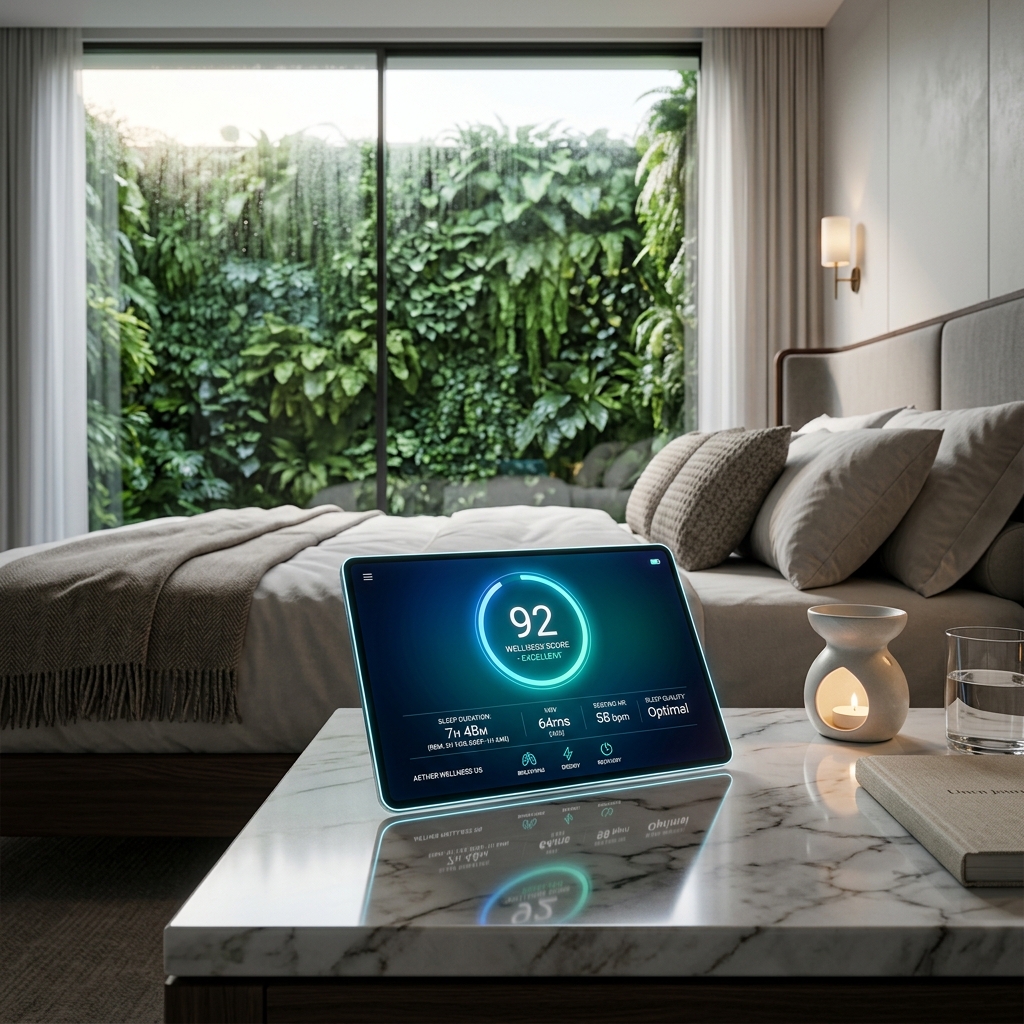
The wellness OS delivers its report at 4:51 a.m. with the quiet satisfaction of a system that has never had a bad day.
Sleep architecture: excellent. Cortisol gradient: optimal. Cellular stress index: 2.1, well within the Tier 1 threshold. Subjective age equivalent: 26.3 years. Chronological age: 43. The delta is money. Dex has learned not to think of it as money, because that framing is ungenerous to the sophistication of the science, but the delta is money.
He lies in the dark for thirty seconds, which is the medically recommended interval for allowing the autonomic system to complete its transition from sleep architecture to waking state without cortisol spike. He has been doing this for six years. It works. Everything in his life that he has been told to do and has done has worked, which is not luck but causality, and causality is what he does for a living.
Presca's suite is on the other side of the apartment, on the south-facing wall. She will have her own OS report, her own thirty seconds. They have found that the arrangement suits them. It is a large apartment — forty-third floor, the tower at Kessler Green — and the arrangement is not unusual among people of their position. Some configurations suit certain stages of partnership. The important thing is the partnership, which is real.
He showers. The water is Alpine Grade, which is a function of the tower's service level, which is a function of what the tower costs, which is not a thing he thinks about in the morning. The water is excellent.
The window faces north. In the predawn dark he can see the Green Ring — the planted corridor that separates the premium residential zones from the management zones — and beyond it, when it's this dark and the atmospheric particulates are in a useful range, the faint grid-glow of the Deep Grid. The Deep Grid is where the city continues in its other register. He drives around it. He does not think of himself as someone who drives around things; he thinks of himself as someone who uses the infrastructure efficiently, and the infrastructure that serves his life does not intersect with the Deep Grid, and this is not a moral statement about the Deep Grid, it is simply a matter of routing.
His daughter's room is two floors up. Isla. She's eleven. She sleeps late, which at this age is biologically appropriate; he's read the literature.
He has work to do.
II.
The Meridian Club sits in the air-rights development above the transit hub at Fennen Square, accessible from the elevated pedestrian network at Gate 7. The water comes from the Alpine Vault, which is part of Cerulean Strategic's Resilience Portfolio — a set of natural-resource positions in geologically stable, low-volatility regions that allows the firm to offer clients genuine scarcity hedges in an era of environmental price discovery. The water is cold. The lighting is the quality of northern European morning, which is a specific tone of light that communicates seriousness without severity.
Dex is at the table at 7:15. The Torrens arrive at 7:20, which is two minutes ahead of the scheduled time, which tells him something about their current anxiety level.
The Torren family: a second-generation wealth position, diversified across infrastructure, biomedical data licensing, and what Dex's firm categorizes as Complexity Horizon Positioning — which is the portfolio of assets whose value increases as conditions destabilize. Water rights are a core holding. Agricultural futures in water-stressed regions. Private security provision contracts. Climate migration corridor real estate. The portfolio is, from an architecture standpoint, elegant: when things get worse, the Torrens get better. The elegance is mathematical, not moral, though Dex would not frame it as a question requiring moral framing. The market reflects condition. The portfolio reflects the market. This is the function of the portfolio.
Aldric Torren — the father, seventy-eight, cellular reset to roughly fifty-five, a broad face and the careful stillness of a man who has been listened to for decades — sits at the center of the table and says almost nothing. This is his tell: when he has something at stake, he goes quiet and lets his children do the preliminary work.
The children: Mads, who is twenty-two and phenotypically eighteen — Tier 1 treatments, early adoption, the smooth skin of someone for whom time has been negotiated with — and Solen, who is twenty-five and looks it. Solen has spoken, in previous meetings, about the ethics of differential aging. He does so with a moral seriousness that makes everyone in the room slightly uncomfortable without being able to say why, because there is nothing wrong with choosing not to take treatments. It is a choice. Solen is making a choice.
The agenda is the Sahel water rights portfolio — a significant position in extraction and distribution rights in a region undergoing what Cerulean's analysts call "hydrostress amplification with downstream displacement effects." The position has performed strongly. It will continue to perform strongly. The question before the meeting is rebalancing: whether to deepen the position or to diversify into Cerulean's Managed Transition instruments, which are longer-duration assets structured around the political normalization of displacement — essentially, positions in the infrastructure of the world that comes after.
Dex walks them through the architecture. He is good at this. He has the ability to hold the whole structure in his mind simultaneously — the asset positions, the liability exposures, the political weather at the regulatory layer, the narrative positions that need to be managed in the public sphere — and to communicate it to clients in a way that makes complexity feel like clarity. This is a genuine skill. He is not performing competence; he has it.
Mads asks about the liquidity windows. Dex explains.
Then Solen says: "There are people dying in the Sahel."
He says it the way he always says things like this — directly, without rhetorical preparation, in a tone that is not angry but is not comfortable either. A statement. He expects a response.
Dex looks at him. He is not unmoved by the statement. He is not someone who is unmoved by things. He is someone who has moved through many things and understood them and placed them correctly within the larger structure of how things work, and from that placed position he can speak to this.
"The stress in the region creates the value," Dex says. "That's the mechanism. The resource is finite, the competition for it is real, and positions held prior to the competition have value in proportion to the severity of the competition. That's price discovery. The dying is the condition that the market is reflecting, not the condition the market is creating. The withdrawal of capital from the region wouldn't change the underlying hydrology."
He believes this.
He has thought it through carefully, over years, and it holds. The logic holds.
Solen looks at him for a moment. Then he looks out the window at the Green Ring. Then he picks up his water — Alpine Grade, from the Vault, from the Portfolio — and drinks.
Aldric says something about the transition instruments. The meeting continues.
III.
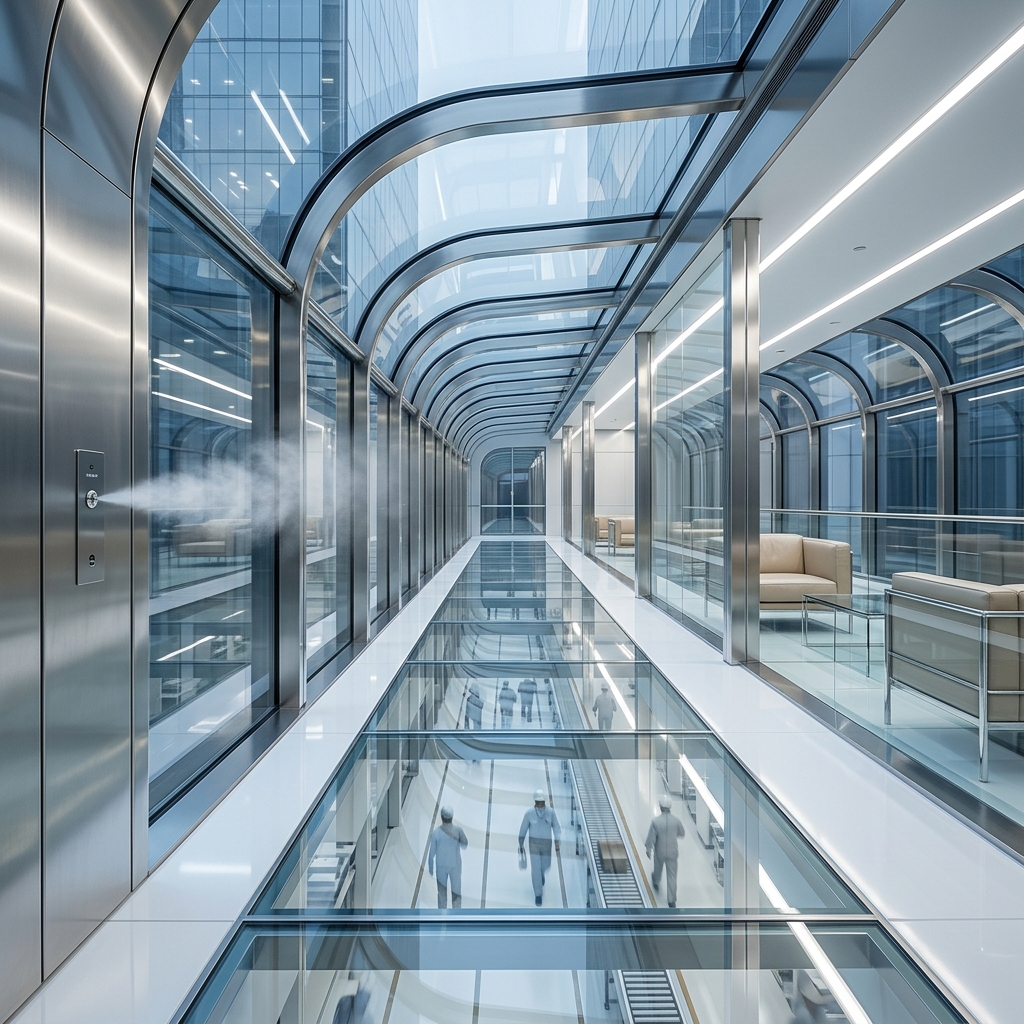
The elevated pedestrian network runs from Fennen Square through the Kessler Green to the Cerulean Strategic tower at Aldwich Point, a distance of 1.4 kilometers. It is enclosed. The air is conditioned to 21°C and scented with something that the building's air-management system describes, in its documentation, as "Nordic Conifer Blend, Signature Profile C." This means: pine, cold, a suggestion of altitude. A suggestion of somewhere that is not here.
Dex walks briskly because he walks briskly everywhere and because the 8:15 review call does not move. Around him, other people who work in the towers above Kessler Green move at the same brisk pace. No one looks at anyone directly. They are all going somewhere. Being in transit is the normal condition.
The transparent floor panels are a feature. The building's marketing materials describe them as "a gesture toward urban transparency." Through them, from above, you can see the service level — the logistics corridor at ground level where the delivery networks operate. Pale grey kit. A specific shade: not white, which reads as hospital, and not dark, which reads as security. A neutral grey that means: functional, background, infrastructure.
There are more of them than there were five years ago. He notices this without quite intending to. The delivery economy has scaled; the AI routing systems have optimized; it makes sense that there are more workers because there is more demand. He is one of the demand. His groceries arrive in forty minutes. His daughter's school kit arrived before he woke. The system works and the workers are part of the system working.
From up here the grey figures move in patterns that feel almost — he looks at them for three seconds — almost choreographic. The routing algorithms assign them optimally. They move without choosing where to move, they arrive when the system has determined they should arrive, they take what is given and return to the network. It is efficient. It is the highest-resolution matching of labor to task that human civilization has ever achieved.
He has a brief thought about what this looks like from the other side.
He moves quickly. The review call is at 8:15 and it does not move and he does not finish the thought.
IV.
The difficult call is difficult in the specific way that difficult calls in Dex's work are difficult, which is to say: not emotionally difficult, because the emotional register is not the operative register, but architecturally difficult. There are load-bearing elements that are under stress and the question is load redistribution.
The consortium managing the Defense Solutions subsidiary — this is the part of the portfolio that Cerulean holds at arm's length, through a series of intermediate structures, for reasons that do not need to be stated because they are self-evident to everyone in the call — has surfaced a complication. The complication relates to the component manufacturing facilities operating in support of what the consortium calls the "northern periphery regional stabilization event with elevated kinetic activity." There are two threads: one is liability exposure related to labor condition documentation in the facilities; the other, which the consortium's VP (who is referred to throughout the call by his initials, WV, a convention Dex finds helpful) raises last and in the flattest possible voice, is the age of some workers in one of the facilities.
There is a pause on the call after WV says this.
Dex writes, on the notepad he keeps for calls of this nature: doc gap. worker age. jurisdictional Q. narrative architecture needed.
The narrative architecture discussion takes forty minutes. It involves: how the documentation gap came to exist, which is a story about supply chain complexity and the difficulty of verification in conflict-adjacent manufacturing environments, which is true; what the regulatory exposure window looks like, which is a function of the jurisdictional question, which is a function of which governing frameworks apply to facilities in the stabilization zone, which is genuinely unclear; and what the story is if the story becomes public, which means: who are the speakers, what is the sequence, what is the frame.
The frame, they agree, is: complexity and good faith. The frame is not: we knew. Because there was no knowing. There was a documentation gap and a supply chain that extended into a difficult region and the firm has immediately engaged a third-party auditor. The frame is real in the parts that are real and the parts that are not real are not addressed directly, which is not unusual.
Dex makes a note.
He has thought this all through before. Not this specific situation, but this structure — the liability, the documentation, the narrative management — enough times that the thinking has worn a smooth groove. He doesn't so much think it as travel along it. The groove leads to the same destination: the structure is managed, the exposure is contained, the operation continues. The operation is part of the Resilience Portfolio. The Resilience Portfolio supports the clients. The clients are families — real families, with children, with futures they are trying to secure. He serves a real function.
Lunch arrives at his desk at 12:30. A grain bowl from the biome certification delivery service. He eats while reviewing the materials from the Torren call. The Alpine water in the bottle at the edge of his desk.
He does not think about the Sahel over lunch.
He thinks about the Torren rebalancing architecture and about the 3 p.m. infrastructure call and about Isla's school thing on Friday that he has marked in the calendar and genuinely intends to attend.
V.

Kel comes to the office every Tuesday and Thursday at 2 p.m. This is the mandatory wellness hour, which is not exactly mandatory in the way that employment law creates mandatories but which Cerulean Strategic has built into the day because the data shows that directors at Dex's level without structured wellness practice show cognitive degradation markers at year seven, and the firm has an interest in the cognitive capacity of its senior directors, so the wellness hour is provided as a benefit and marked on the calendar as immovable, and in this way is mandatory.
Kel is a practitioner. Body movement, breathwork, somatic regulation — an integrated approach. She is good at what she does in a way that Dex, who is professionally attentive to competence, can recognize. She has been working with bodies for a long time.
Her hands are the hands of someone who worked differently, earlier. He notices this when she presses along the thoracic vertebrae, searching for the held tension that accumulates between the scapulae in people who sit in postures of forward management. The hands have a quality of knowing that is not learned in a certification course. He is curious about this, briefly. What she did before. What shaped that knowing. The thought arises and he does not follow it, because the session is about receiving, not interrogating, and he is trying to do the receiving correctly.
The body scan begins in the feet. He is attentive to his feet. He works upward.
He is very good at the breathing portion. He has practiced. His HRV scores during the breathing are excellent. His OS confirms this after each session. He is performing wellness correctly.
At some point between the third and fourth breathing cycle — he is not sure exactly when, because the boundary between thoughts is not always clear in the breathing — a thought arrives about the Sahel. What the hydrostress looks like from the side of the stress. Not the portfolio, not the mechanism, not the price discovery — from the side of the dying, which is the word Solen used and which Dex used the word "condition" to replace and which has now, in the breathing, arrived back as "dying," because the breath goes somewhere the vocabulary of yield and architecture does not always follow.
The thought lasts perhaps four seconds.
Then the breath returns, and the thought recedes, and the session continues.
Afterward, he tips Kel through the platform. He tips generously — thirty percent above the displayed rate — because she is good at what she does and because generosity is a value he holds and because something in the session felt like it should be acknowledged without requiring him to say what the something was. The platform takes thirty-four percent of his tip. He knows this. He has thought about it and concluded that the platform provides the matching and scheduling infrastructure that makes the session possible and that the fee reflects the value of that infrastructure. He has concluded this satisfactorily.
He has two more calls before six.
VI.

The Meridian Covenant Gala is held in the Atrium at Aldwich House, which is a different tower from the Cerulean tower, connected by the elevated network. The venue is 22°C. Outside, the city advisory has announced a heat advisory in effect at 44°C with a humidity adjustment that brings the operative temperature to 49°C. Three Deep Grid zones have been issued water distribution failure notifications; the notifications explain that municipal supply will be interrupted for a period of up to forty-eight hours and that mobile distribution stations are being deployed at designated points. The mobile stations have maps. The maps are available on devices with network access. Most people in the affected zones have network access.
Inside the Atrium: extraordinary. The biome certification caterers have done something remarkable with seasonal production — this is the first year the Northern Preserved Range has produced sufficient yields at Tier 1 quality, which means genuine freshness rather than atmospheric-cultivated synthetic freshness, and the difference is real and present in everything on the table. A string quartet plays in the east corner. String music is rare enough to be meaningful — this is not nostalgia, it is scarcity, and scarcity at a Covenant event communicates something specific about the host's commitment to cultural quality. The quartet is live. The musicians are real. He can see the rosin dust in the light above the instruments and this, too, means something: presence, materiality, the body in the room.
The room is beautiful. He is not wrong to notice that it is beautiful.
He moves through it with the ease of someone equally welcome everywhere, which is a kind of emptiness — equally welcome everywhere means fully present nowhere for too long. He says the right things to the right people in the right order. He represents Cerulean Strategic well; this is part of the evening's function. He drinks two glasses of something excellent and eats four small things that he cannot fully taste because he is also listening and tracking the room and making mental notes about a follow-up required in the Infrastructure working group.
Vesna Parel, who runs the climate adaptation fund at Meridian Capital, asks him how the Torren rebalancing is going. He gives her a version of the answer that acknowledges the conversation while protecting the client. This is also part of the function. He does it well.
At some point — it is not a significant moment, just a moment — he is standing near the south window, a few feet from the glass, looking at the city. The sky has a color. He has noticed, increasingly, that the sky has a different color than he remembers the sky having, though he could not describe the difference with precision. He was a child in the city and the sky was a color then and now it is a different color. This is particulate loading, which is a function of the atmospheric pressure systems, which is a function of several things he understands analytically and does not need to feel.
He notes the color and looks back at the room.
The car home passes through the precautionary measure route — two Deep Grid corridors have been closed to non-essential traffic during the distribution failure, as a crowd management protocol, and the routing AI navigates around. The city is quiet. But: pale grey kit. The delivery networks don't suspend. The platforms don't close. The routing continues because the demand continues because the demand does not check the heat advisory and the workers cannot decline without affecting their platform ratings, which is a feature of the system that has been reviewed and has been found to be on the correct side of the legal threshold in the applicable jurisdictions.
He watches the grey figures moving through the orange-lit streets. They move in the pattern of the algorithm. They move because the system is still moving.
He notices the sky again, briefly.
The car arrives at the tower. The lobby is cool. The elevator is efficient.
VII.
His daughter is awake.
She is sitting on the rug in the small room between the kitchen and the main living area — the room that has never had a proper name in their apartment, that functions as a second sitting room or a homework space or a nothing room depending on the evening — with her tablet propped against the low table and the civil infrastructure feed playing. He can see it from the door: the feed, not the room. The mobile station footage from the three affected Deep Grid zones. The lines.
"Dad." She says it quietly, not startled. She has been waiting for him in the way children wait for parents late, not anxiously exactly but with a specific attention.
He sits on the couch at the edge of the room.
The lines at the mobile stations extend past the camera range. The camera is a fixed civil infrastructure camera, installed at a height of roughly four meters, with a field of view that captures maybe sixty meters of queue. The queue extends beyond that. He does not know how far. He does not have the data point.
"There are a lot of them," Isla says.
She is eleven. She watches things with a directness that he finds, consistently, both admirable and difficult to meet — the directness is not hostility, it is simply the absence of the mediating vocabularies that adults acquire to make the world manageable.
He gives the explanations. He gives them gently and truthfully — truthfully in the sense that they are true: the distribution infrastructure in the Deep Grid zones has been operating beyond design capacity, and the failure is a municipal infrastructure failure, and the response is coordinated, and the mobile stations are deployed, and the situation will be resolved within the period specified in the advisory. These are true things. He says them in the order that makes them cohere.
He does not say: the water markets. He does not say: the Resilience Portfolio. He does not say: Sahel.
She is looking at the screen. "Are we going to do anything?"
It is a child's question in the sense that it has not been taught to expect a certain kind of answer. She means: the people in the queue, the camera, the forty-eight hours, us. Are we going to do anything. It is not naive. It is what the situation calls for as a question.
He looks at his daughter.
He looks at his hands.
Something that has been in the room with him all day — has been in every room he has been in today, in the Meridian Club and on the elevated walkway and on the difficult call and in the breathing and in the gala — something that the language of yield and architecture and transition and narrative management and resilience and positioning was not built to name, that has no designation in the vocabulary of Complexity Horizon work, is suddenly and briefly impossible not to acknowledge. Not a feeling, exactly. Or: a feeling that exists in the space before language arrives to manage it. A duration of four seconds, or eight, or longer — he does not know, he is not counting.
He is looking at his hands.
He says: "We should sleep."
He stands. He moves in the direction of his room, which is across the apartment and down a short hall, and the rooms he passes through have the quality of rooms he passes through without stopping because there is nothing in them to stop for, which is a large apartment's tax on the person who lives in it: a great deal of space that must be transited in order to reach any particular place.
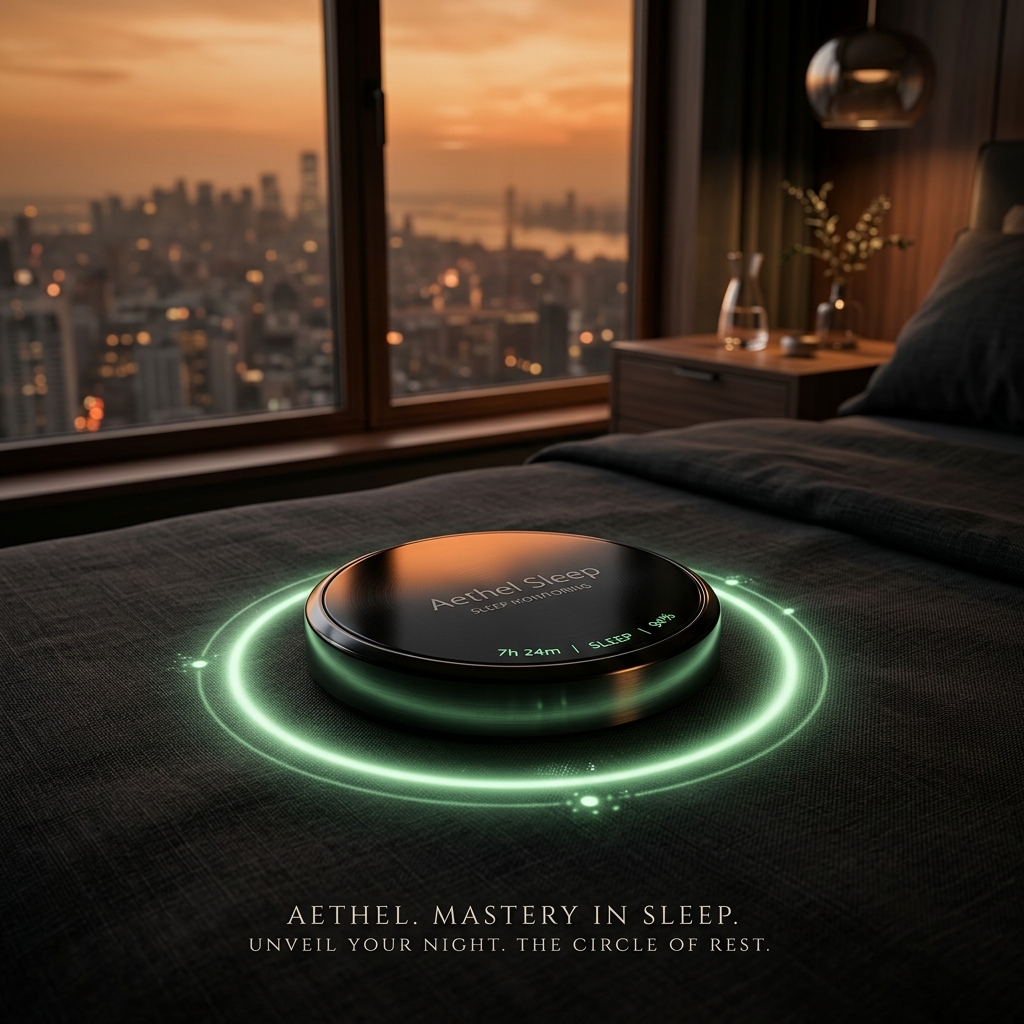
His room. His sleep monitor activates when he enters. The window faces north. Through it: the Green Ring, the Deep Grid beyond it, the sky. The sky is the color it is now. He has been noticing this all day without having anything to do with the noticing.
He lies down.
The sleep monitor notes a slight delay in onset.
He is looking at the ceiling in the dark, and what he sees — this is not a thought, it arrives as image, the way some things arrive — is a field. A field that has been grazed down to the root by something very hungry that has not yet understood what it was eating. The grass gone. The soil underneath beginning to show. The something hungry still moving across it, still feeding, not understanding that the understanding it lacks is the one thing that would save it.
The hunger continues.
The field continues.
For now, both.
His OS notes the delay. It will adjust his morning protocol accordingly. Tomorrow his cortisol gradient will be optimized. His cellular stress index will return to baseline. He will wake at 4:51 with an excellent report and lie in the dark for thirty seconds, which is the recommended interval for the autonomic system to complete its transition.
He will have work to do.
End of Services.


